
TL;DR:
- Effective office holiday parties depend on early planning, inclusive themes, and activities that foster genuine connection. A diverse committee manages logistics, budgeting, and entertainment to ensure a memorable and inclusive event. Prioritizing team culture and shared experiences creates a positive atmosphere that lasts beyond the celebration.
Holiday party planning for the office is the process of organizing a festive, inclusive corporate celebration that builds team morale while managing budget, logistics, and diverse employee needs. Done well, a workplace holiday party strengthens relationships and gives your team something to look forward to each year. Done poorly, it drains your budget and leaves people feeling excluded. This guide walks you through every stage of corporate party planning, from setting your budget to booking entertainment, so you can run an event your whole team will remember.
How to set your holiday party planning office budget and timeline
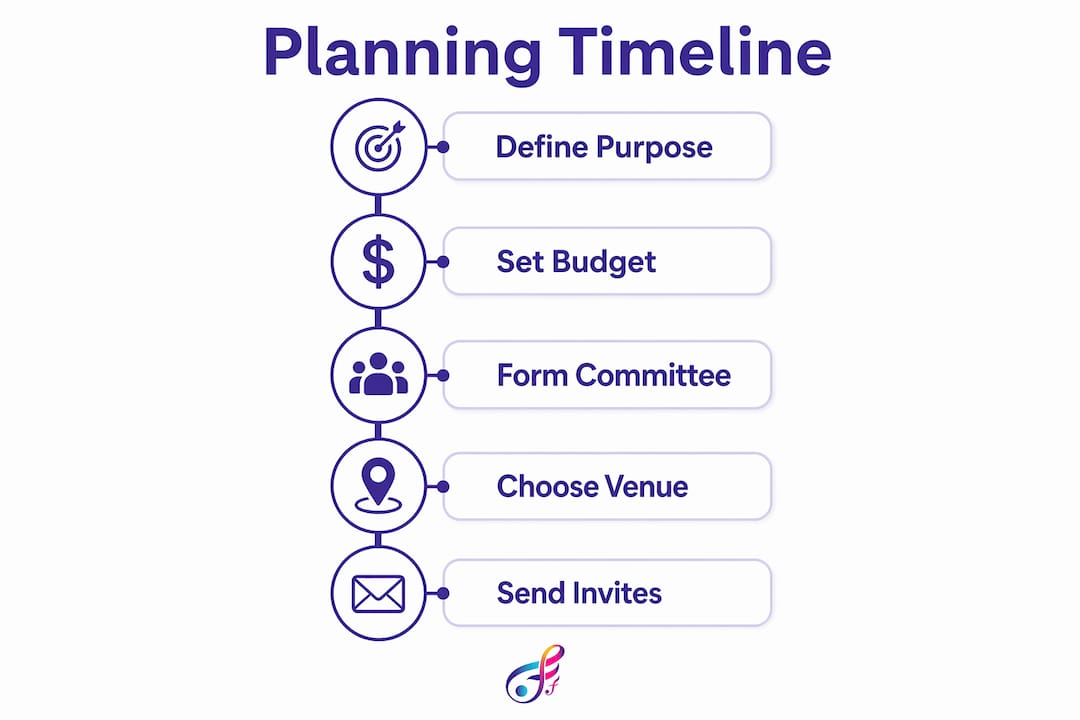
The first decision in any office holiday event is defining your "why." Setting the event purpose at the start shapes every downstream choice, from venue size to entertainment format. A team appreciation party calls for a different setup than a client-facing gala.
Budget comes next. Corporate holiday party budgets typically range from $25 to $150 per person, depending on whether you host in-office or offsite. A catered in-office lunch sits at the lower end, while a full offsite dinner with entertainment pushes toward the top.
A proven budget allocation framework breaks spending into categories:
- Venue: 30–40% of total budget
- Catering: 20–25%
- AV and production: 10–15%
- Travel or lodging: 15–20%
- Contingency buffer: 10–15% for unforeseen costs
Most planners make one costly mistake: they budget for total headcount. Planning with low, medium, and high attendance scenarios gives you tighter cost control and prevents overspending when RSVPs come in lower than expected.
Timeline matters just as much as money. Lead times vary by company size: small teams need 6–8 weeks, mid-sized companies need 10–12 weeks, and large organizations should start 4–6 months out. Starting late is the single most common reason office parties feel rushed and disorganized.
Pro Tip: Build your contingency buffer into the budget from day one, not as an afterthought. Treat it as a locked line item, not a slush fund.
Why you need a planning committee for workplace holiday celebrations
A single person planning an office party for 50 or more people will burn out. Successful planning committees have 3–5 members drawn from different departments and backgrounds. That diversity ensures the event appeals to your full workforce, not just one team's preferences.
Assign clear roles from the start. A well-structured committee covers these functions:
- Budget lead: Tracks all spending, manages vendor invoices, and flags overruns early.
- Logistics coordinator: Handles venue booking, setup timelines, and day-of operations.
- Communications lead: Sends invitations, manages RSVPs, and builds pre-event excitement.
- Entertainment planner: Sources DJs, photo booths, games, and activity vendors.
- Inclusivity advisor: Reviews all decisions through the lens of dietary needs, accessibility, and cultural sensitivity.
Shared project management tools centralize vendor contracts, RSVP lists, and task assignments in one place. Without a single source of truth, details fall through the cracks during handoffs between committee members. Tools like Google Workspace, Asana, or Trello all work well for this purpose.
Pro Tip: Schedule a 20-minute weekly check-in for the committee starting 8 weeks out. Short, consistent meetings prevent last-minute scrambles far better than long planning sessions held once a month.
How to choose the right venue and theme for your office party
Venue selection sets the tone for everything else. Book early, especially for events planned in november or december, when popular venues fill up fast. For a team of 20, your office breakroom might work fine. For 100 people, you need an offsite space with parking, accessibility, and enough room for activities.
Consider these venue options based on your event size and budget:
- In-office: Low cost, familiar, easy to decorate. Works best for smaller teams or daytime events.
- Restaurant private room: Mid-range cost, catering handled, limited customization.
- Event hall or hotel ballroom: Higher cost, full flexibility, ideal for large teams or themed events.
- Outdoor or hybrid spaces: Seasonal risk, but memorable when weather cooperates.
Theme selection is where many planners go wrong. Religious or culturally specific themes exclude employees who do not share those traditions. Inclusive themes like "Winter Wonderland," "Decades Night," or "Around the World" give everyone a way to participate. The goal is a theme that sparks conversation and creativity without making anyone feel like an outsider.
| Theme type | Best for | Inclusivity level |
|---|---|---|
| Winter Wonderland | All team sizes | High |
| Decades Night | Teams that enjoy nostalgia | High |
| Ugly Sweater | Casual, smaller teams | High |
| Cultural Potluck | Diverse, food-focused teams | Very high |
| Black and Gold Gala | Formal, client-facing events | Medium |
Decorating does not require a large budget. String lights, table centerpieces, and a photo backdrop create a festive atmosphere for well under $200 in most office spaces.
Best practices for catering and entertainment at office holiday events
Catering is the element most likely to go wrong if you skip the details. Collect dietary needs carefully, and distinguish between preferences and medically critical allergies. A guest with a nut preference is different from a guest with anaphylactic risk. Ask for severity level on your RSVP form, not just a checkbox.

For food service, you have two main paths. In-house catering works for smaller budgets and familiar spaces. External catering vendors give you more menu variety and professional service, but add cost and coordination complexity. Either way, always confirm final headcount with your caterer at least one week before the event.
Entertainment is where planning festive office gatherings shifts from functional to memorable. The best options share one quality: they invite participation without creating pressure.
- Professional DJ: Sets the energy for the whole event. A corporate event DJ reads the room and adjusts the playlist to keep energy high without overwhelming conversation.
- Photo booth: Gives guests a low-pressure activity and a physical takeaway. Photo booth props add humor and encourage participation from even the most reserved employees.
- Team games: Trivia, bingo, or a scavenger hunt work well for groups that enjoy light competition.
- 360 video booth: A newer option that creates shareable content and generates genuine excitement on the event floor.
Low-pressure entertainment aligned to team culture produces more enjoyable events than elaborate productions that feel performative. The goal is connection, not a show.
Alcohol requires a clear policy before the event. Many companies offer a drink ticket system, limiting consumption while still providing a social option. Always have non-alcoholic alternatives prominently available, not tucked in a corner.
Pro Tip: Place the photo booth or activity station near the food area. People naturally gather there, and proximity to an activity reduces the awkward "standing around" phase that kills early event energy.
How to manage invitations, RSVPs, and last-minute logistics
Invitations set expectations. Send a save-the-date at least four weeks before the event, then follow with a formal invitation two weeks later. Both should include the date, time, location, dress code, and a clear RSVP deadline.
Use a digital RSVP tool to collect attendance and dietary information in one step. Google Forms, Eventbrite, and similar platforms handle this well without requiring a paid subscription. Set your RSVP deadline at least ten days before the event so vendors have time to adjust.
Follow this sequence for the final two weeks:
- Send RSVP reminder to non-responders one week before the deadline.
- Confirm final headcount with the caterer and venue five to seven days out.
- Confirm all vendor arrival times and setup requirements three days out.
- Distribute a day-of timeline to the planning committee 48 hours before the event.
- Conduct a walkthrough of the venue the morning of the event to catch setup issues early.
| Task | Timing |
|---|---|
| Send save-the-date | 4 weeks before |
| Send formal invitation | 2 weeks before |
| RSVP deadline | 10 days before |
| Confirm vendors | 5–7 days before |
| Day-of walkthrough | Morning of event |
Communication between the save-the-date and the event builds anticipation. A mid-point teaser about the theme, menu, or entertainment gives employees something to talk about and reduces no-shows.
Key Takeaways
Successful office holiday party planning requires early budgeting, a diverse committee, an inclusive theme, and entertainment that invites participation without pressure.
| Point | Details |
|---|---|
| Start with a clear purpose | Define the event's goal before making any venue or budget decisions. |
| Budget by scenario | Model low, medium, and high attendance to avoid overspending on headcount. |
| Build a diverse committee | A 3–5 person cross-departmental team distributes work and improves inclusivity. |
| Choose inclusive themes | Themes like Winter Wonderland or Cultural Potluck welcome all employees equally. |
| Prioritize low-pressure entertainment | Photo booths, DJs, and team games create connection without making anyone uncomfortable. |
What I've learned from watching office parties succeed and fail
The parties that people talk about in january are never the most expensive ones. They are the ones where someone clearly thought about the people in the room. I have seen companies spend $10,000 on a catered gala that felt cold and forgettable. I have also seen a $1,500 in-office party with a DJ and a photo booth that had people laughing until the venue closed.
The biggest mistake I see is planning for impressiveness instead of comfort. Events aligned to team culture consistently outperform elaborate productions that prioritize optics over connection. When employees feel seen and comfortable, they engage. When they feel like props in a corporate photo shoot, they leave early.
Inclusivity is not a checkbox. It shows up in every decision: the theme, the food options, the entertainment format, the timing of the event. Committees that include voices from across the organization catch blind spots that a single planner will miss every time.
My honest recommendation: spend less on decor and more on the two things that drive memory, music and shared experiences. A great DJ and a photo booth will do more for team morale than an ice sculpture. Keep the planning process organized with a shared dashboard, assign clear roles, and check in weekly. The logistics are manageable. The culture you build around the event is what lasts.
— Drew Deenie
How Fiesta Fusion can make your office holiday party unforgettable
Planning a great corporate celebration takes real entertainment to bring it to life. Fiesta Fusion is a veteran-owned DJ and event company serving Ogden, Weber County, Davis County, and Salt Lake City, and they specialize in exactly this kind of event.
Fiesta Fusion offers professional DJ services, photo booth rentals, 360 video booths, and custom uplighting, all available as a package or individually. Their corporate event packages are built for office settings, with flexible setups that work in conference rooms, hotel ballrooms, and outdoor spaces. You can browse their full lineup of event enhancements to find the right fit for your team size and budget. Booking is straightforward, and their team handles the entertainment logistics so your committee can focus on everything else.
FAQ
How far in advance should I plan an office holiday party?
Lead times range from 6 weeks to 6 months depending on company size. Small teams need 6–8 weeks; large organizations should start 4–6 months out.
What is a realistic per-person budget for a corporate holiday party?
Corporate party budgets typically run $25 to $150 per person. In-office events with simple catering sit at the lower end, while offsite dinners with entertainment push higher.
How do I handle dietary restrictions for an office party?
Ask for dietary needs on your RSVP form and collect allergy severity levels, not just food preferences. Share this information directly with your caterer at least one week before the event.
How many people should be on a holiday party planning committee?
A committee of 3–5 people from different departments balances workload and ensures the event reflects diverse employee perspectives.
What entertainment works best for office holiday parties?
Low-pressure options like a professional DJ, photo booth, or team trivia work best. Entertainment that invites participation without pressure creates a more welcoming atmosphere than competitive or performance-based activities.