TL;DR:
- Layering multiple warm light sources transforms a flat room into an inviting, dynamic space for indoor parties. Using ambient, accent, and task lighting creates depth and guides guest behavior, with warm white at 2700K being most flattering. Planning zones and including 3 to 5 light sources ensures a cohesive setup that enhances atmosphere without overcomplicating installation.
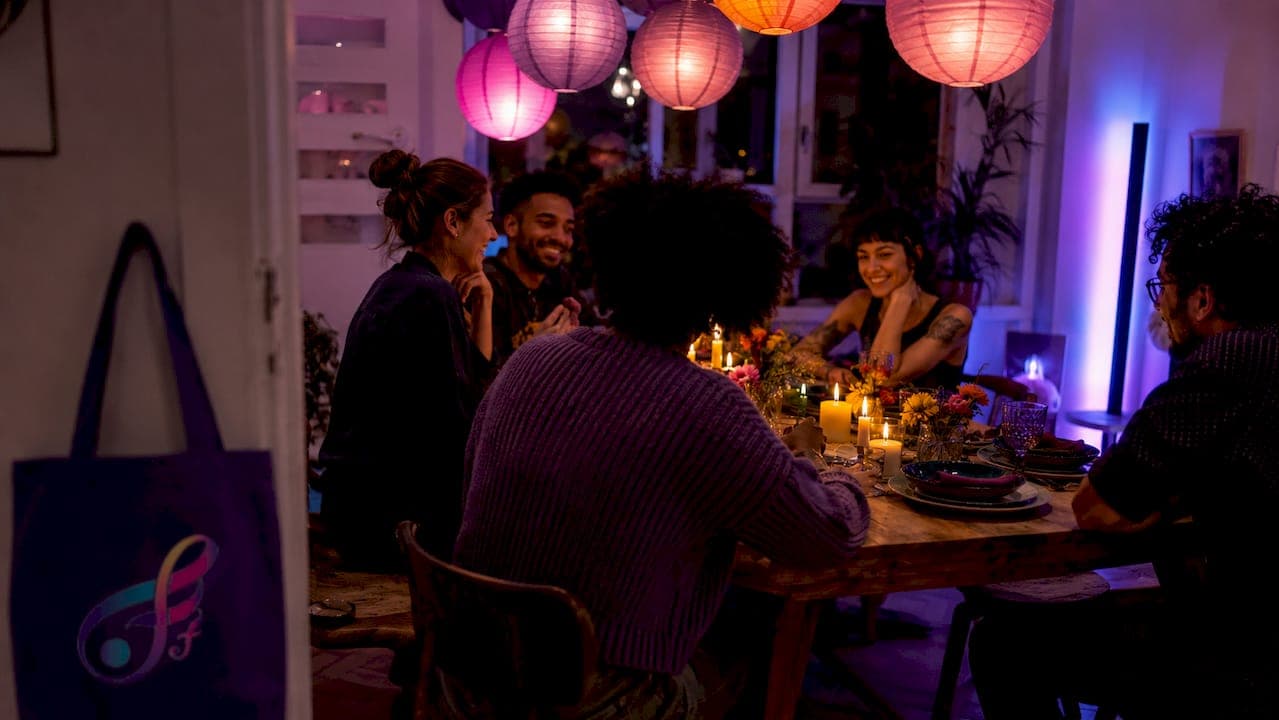
Event lighting for an indoor party is defined as the deliberate layering of multiple light sources at different heights and color temperatures to transform a flat, overhead-lit room into a warm, dynamic space guests actually want to stay in. Experts recommend 3–5 distinct light sources for a medium-sized indoor space to avoid the sterile look that a single ceiling fixture creates. Warm white at 2700K is the most flattering color temperature for social indoor events. Get that foundation right, and every other creative lighting decision you make will land.
What types of event lighting work best for indoor parties?
The best event lighting options for indoor parties fall into three functional categories: ambient, accent, and task lighting. Ambient light sets the overall mood. Accent light draws attention to specific zones or features. Task light serves practical needs like the food table or bar area. Using all three together creates the visual depth that makes a space feel designed rather than decorated.
Ambient lighting covers the broadest area and sets the emotional tone of the room. String lights and Edison bulb strands hung overhead deliver warm, diffused glow without harsh shadows. LED wash fixtures mounted at floor level can bathe entire walls in color, shifting the perceived size and mood of a room in seconds.
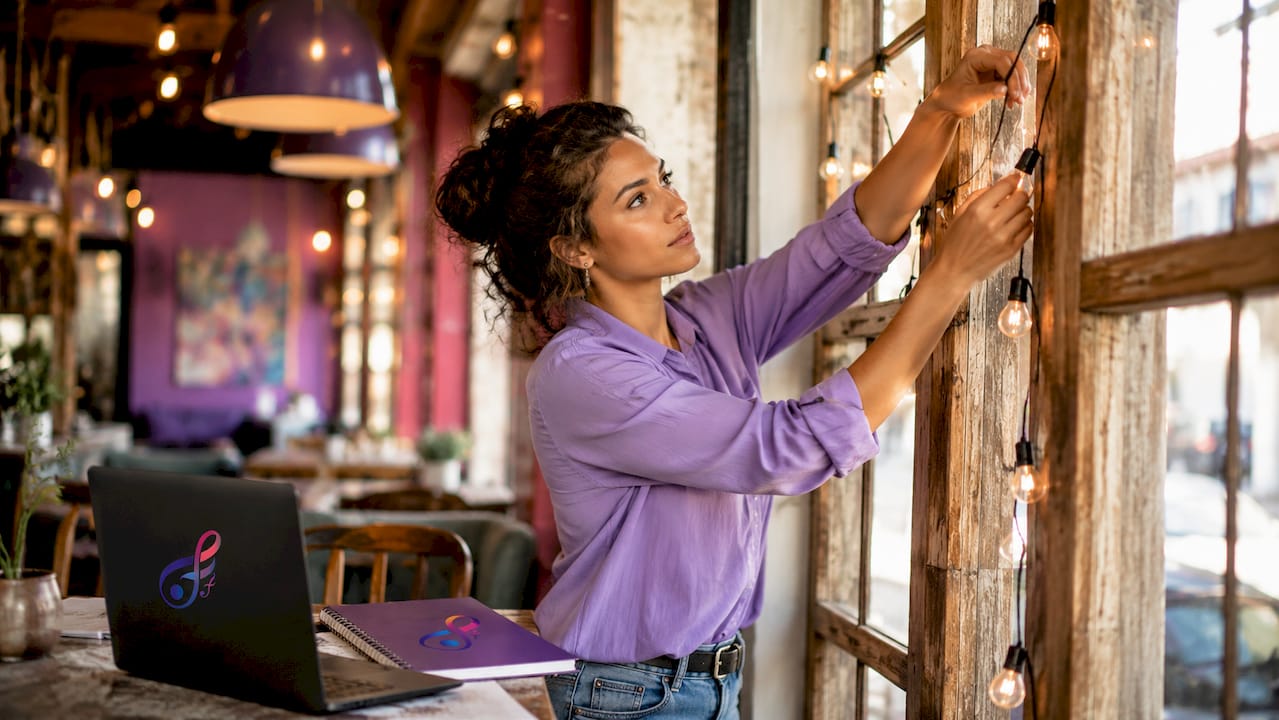
Accent lighting is where personality enters the picture. Uplights placed behind furniture or in corners create dramatic pools of color. Table lamps and floor lamps tucked into conversation nooks signal to guests that those areas are meant for sitting and talking. Layering at different heights guides guest flow naturally, pulling people toward the dance floor or away from congested areas without a single sign or rope.
Sound-active fixtures are the most underrated tool for DIY party planners. Plug-and-play sound-active lighting syncs effects to music beats without any professional control system or programming. You plug them in, set the mode, and the lights respond to the bass automatically. For a birthday party or quinceañera, that kind of dynamic effect used to require a full production crew.
- String lights and Edison strands: Best for overhead ambient warmth
- LED uplights: Best for wall washing, color theming, and zone definition
- Table and floor lamps: Best for intimate conversation areas and accent depth
- Sound-active LED fixtures: Best for dance floors and high-energy moments
- Smart color-changing bulbs: Best for programmable scene shifts throughout the night
Pro Tip: Place your brightest light source near the dance floor and your dimmest near seating areas. Guests will naturally gravitate toward the energy level that matches what they want to do.
How to plan your indoor party lighting setup
Planning starts with your room, not your shopping cart. Measure the perimeter of the space and identify the three or four zones you want to create: a welcome area, a main gathering or dance zone, a food and drink station, and a lounge or seating corner. Each zone needs its own lighting intention.
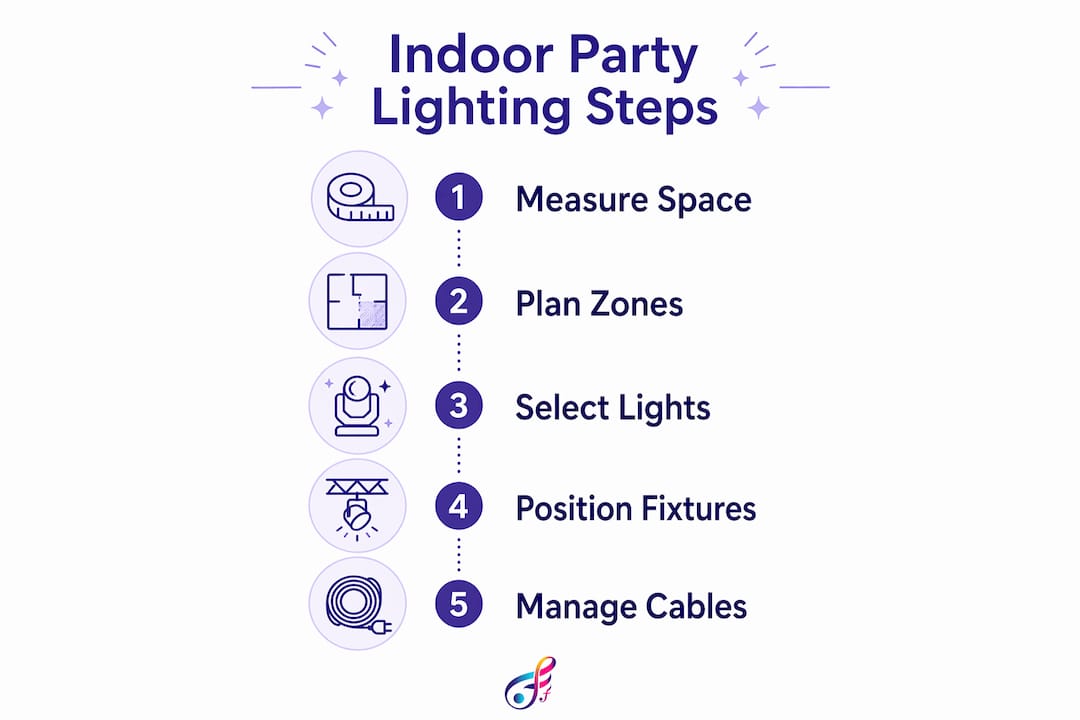
For a medium-sized room, 3–5 distinct light sources cover the space without overcrowding it. A large open basement or banquet hall may need 6–8 sources to avoid dark dead zones. Write down each zone, assign a light type to it, and note the power outlet locations before you buy or rent anything.
Estimating cable and fixture quantities
String light planning trips up more party hosts than any other step. Budget 20% more linear feet of cabling than your room perimeter measurement. That extra length allows for proper draping, diagonal runs, and the slack needed to avoid tension damage at anchor points. A room with a 60-foot perimeter needs at least 72 feet of string light cable.
| Zone | Recommended fixture type | Estimated quantity |
|---|---|---|
| Dance floor | LED uplights or sound-active wash | 2–4 units |
| Overhead canopy | Edison string lights | Perimeter + 20% |
| Conversation nook | Table lamp or floor lamp | 1–2 per nook |
| Food and drink station | Warm task light or small uplight | 1–2 units |
| Entry or focal wall | Uplight or color wash | 1–2 units |
Rental packages make the budget math easier. All-inclusive Edison string light kits start at around $70 for a 5-day rental, including accessories. That price point puts professional-looking overhead lighting within reach for most party budgets.
Pro Tip: Sketch your room on paper and draw lines where you plan to hang or place each light. This takes 10 minutes and prevents the frustrating mid-setup realization that your extension cord is 6 feet too short.
Step-by-step setup for layered indoor party lighting
Follow this sequence to build your lighting from the top of the room down. Starting overhead and working toward the floor prevents you from disturbing finished lower-level setups.
- Hang overhead string lights first. Attach anchor points (adhesive hooks, tension wire, or ceiling clips) before unrolling any cable. Run the string from one anchor to the next in a grid or zigzag pattern. Leave slack at every anchor point.
- Install uplights along walls and in corners. Point them upward at a 45-degree angle toward the wall for a soft wash effect. For themed colors, set the exact hex code on programmable LED uplights to match your party palette precisely. Using exact hex codes prevents color mismatches that make themed setups look off.
- Place floor and table lamps in seating zones. Use warm bulbs (2700K) in every lamp. Avoid cool white or daylight bulbs, which read as clinical and unflattering in social settings.
- Set up sound-active fixtures near the dance floor. Plug them in, select the sound-active mode, and test with music before guests arrive. Adjust sensitivity if the fixture is triggering on ambient noise rather than beats.
- Manage all cables before guests arrive. Tape cables flat to baseboards with gaffer tape. Run overhead cables through cable raceways where possible. Never leave loose cables crossing foot-traffic paths.
"Lighting guides how people feel in a space before they consciously notice it. Get the layers right, and guests will describe your party as 'the best vibe' without knowing exactly why."
Cable management and safety
Cable slack and proper management are the difference between a professional-looking install and a hazard. Taut string lights pull anchors loose and can snap bulbs. Cables crossing walkways create trip risks. Use gaffer tape rather than duct tape because it removes cleanly without damaging floors or walls.
Common mistakes to avoid with indoor party lighting
The most common mistake is relying on overhead fixtures alone. A single ceiling light or chandelier creates flat, unflattering light that makes every guest look tired. Adding even one uplight and one string of Edison bulbs changes the entire feel of the room.
Overcomplicating the lighting rig is the second most common error. More fixtures do not automatically mean better atmosphere. A room packed with strobes, moving heads, and color wheels at a birthday dinner creates sensory overload rather than ambiance. Simpler setups with versatile fixtures consistently outperform complex rigs indoors.
- Wrong color temperature: Cool white (5000K+) feels like a hospital. Stick to warm 2700K light for social events.
- No zone differentiation: Using the same light type and intensity everywhere removes the sense of depth and makes the space feel one-dimensional.
- Ignoring cable length: Short cables force awkward fixture placement. Always buy or rent more cable than you think you need.
- Skipping a test run: Set up your full lighting rig the day before and walk through it in the dark. Problems are much easier to fix before guests arrive.
- Forgetting dimmer control: Fixed-brightness fixtures lock you into one mood all night. Dimmable bulbs or smart bulbs let you shift the energy as the party moves from dinner to dancing.
Pro Tip: If your venue has fluorescent overhead lights with no dimmer, bring a roll of warm-tinted diffusion film. Taping it over the fixture softens the output significantly and shifts the color toward a warmer tone without any rewiring.
Key takeaways
Effective indoor party lighting comes down to layering warm, varied light sources at different heights to guide guests, set mood, and create distinct zones throughout your space.
| Point | Details |
|---|---|
| Layer 3–5 light sources | Use ambient, accent, and task lighting together to create depth and visual interest. |
| Stick to 2700K warmth | Warm white light flatters guests and keeps the atmosphere social rather than sterile. |
| Add 20% extra cable | Budget more string light cable than your room perimeter to allow safe, attractive draping. |
| Use sound-active fixtures | Plug-and-play sound-active lights sync to music automatically with no programming required. |
| Keep setups simple | Fewer, more versatile fixtures outperform complex rigs in indoor party environments. |
What I've learned from watching lighting make or break a party
I've watched lighting do more heavy lifting at events than any other single element, including the music. A DJ can read the room and adjust the tempo, but if the lighting is flat and harsh, guests feel exposed rather than immersed. The energy never fully builds.
The insight that changed how I think about indoor party lighting is this: lighting is not decoration. It is architecture. Distinct lighting zones tell guests where to go and what to do when they get there. A bright, color-washed dance floor says "come here and move." A dim corner with a warm floor lamp says "sit here and talk." You are designing behavior, not just aesthetics.
The other thing I'd push back on is the idea that good lighting requires a big budget. A $70 Edison string light rental and two $30 LED uplights can transform a living room or community hall into something that feels genuinely special. The investment is in the thinking, not the gear. Spend 20 minutes planning your zones before you spend a dollar on fixtures, and you will get dramatically better results than someone who buys twice as much equipment without a plan.
My honest advice: start with warm overhead strings, add two uplights in your party's theme color, and place one lamp in every seating area. That combination covers ambient, accent, and intimate lighting with minimal setup time. You can always add more. You rarely need to.
— Drew Deenie
Fiesta Fusion's lighting and event enhancements for your next party
Planning a party in Northern Utah and want professional-grade lighting without the DIY stress? Fiesta Fusion offers event enhancements and lighting packages designed for exactly this kind of celebration, from birthday parties and quinceañeras to corporate gatherings and school dances.
Fiesta Fusion is a veteran-owned company serving Ogden, Weber County, Davis County, and Salt Lake City. The team handles uplighting, photo booths, 360 video booths, and full DJ services so you can focus on your guests instead of your cable management. Visit Fiesta Fusion to browse packages and get your event on the calendar.
FAQ
What is the best color temperature for indoor party lighting?
Warm white at 2700K is the standard recommendation for indoor social events. It flatters skin tones and creates a welcoming atmosphere rather than a harsh or clinical one.
How many lights do I need for an indoor party?
3–5 distinct light sources cover a medium-sized indoor space effectively. Larger rooms may need 6–8 sources to eliminate dark zones and define multiple party areas.
Can I sync party lights to music without a professional system?
Yes. Sound-active lighting fixtures plug directly into an outlet and sync to music beats automatically using a built-in microphone. No programming or control board is required.
How much extra string light cable should I buy?
Budget at least 20% more cable than your room perimeter measurement. The extra length allows for draping, diagonal runs, and slack at anchor points to prevent tension damage.
What is the biggest mistake people make with indoor party lighting?
Overcomplicating the setup is the most common error. Simpler rigs with versatile fixtures consistently create better indoor atmosphere than complex multi-fixture installations.