
Event coordination is defined as the hands-on, operational management of all logistical details that turn a planned event into a live, functioning experience. Where event planning sets the vision, budgeting, and design months in advance, event coordination executes those plans on the ground, managing vendors, timelines, staff, and real-time problems as they arise. The industry term for this function is "event coordination," and it sits within the broader field of event management. Understanding the distinction matters because organizations that blur these roles often face preventable crises on event day.
What is event coordination and why does it matter?
Event coordination is the operational phase of event management. It covers everything from confirming vendor arrival times to solving a sound system failure mid-reception. Planning sets goals and budgets months in advance, while coordination executes those goals primarily during and immediately before the event.
The importance of event coordination shows up most clearly when things go wrong. A caterer arrives 45 minutes late. A keynote speaker needs a different microphone setup than what was ordered. A school dance runs long and the venue manager is asking for the room back. These are coordination problems, not planning problems. The coordinator's job is to absorb those shocks and keep the event moving without the guests noticing.

Coordination also serves as the communication hub for every vendor and staff member on site. Without a single person or team managing that flow, vendors receive conflicting instructions, timelines slip, and the guest experience suffers. Coordinators add value precisely because no event runs flawlessly on a plan alone. The plan is the map. Coordination is the driving.
What are the main responsibilities of an event coordinator?
The role of an event coordinator centers on execution, not strategy. A coordinator's core duties include:
- Vendor management: Confirming arrival times, setup requirements, and point-of-contact details for every service provider
- Timeline oversight: Building and enforcing a master schedule that covers setup, the event itself, and teardown
- Staff coordination: Briefing team members on their roles and keeping them updated as conditions change
- On-site problem-solving: Addressing technical failures, guest issues, and schedule delays in real time
- Communication management: Serving as the single point of contact so vendors and staff receive consistent instructions
The skills that make a coordinator effective are communication, organization, and fast decision-making under pressure. A coordinator who freezes when a vendor cancels two hours before doors open is a liability. One who already has a backup contact in their phone is an asset.
Pro Tip: Build a "day-of" contact sheet with every vendor's cell phone number, not just their office line. Office lines go unanswered on weekends and evenings when most events happen.
In smaller organizations, the planner and coordinator are often the same person. Clear separation of these roles improves workflow by reducing firefighting, but when one person handles both, they need to mentally shift from creative planning mode to execution mode as the event date approaches.
How does event coordination differ from event planning and management?
These three terms get used interchangeably, but they describe distinct functions. The table below shows how each role operates across the event lifecycle.
| Function | Primary focus | Timing | Key outputs |
|---|---|---|---|
| Event planning | Strategy, budget, design, vendor selection | Months before the event | Contracts, budgets, venue bookings |
| Event coordination | Logistics, timelines, vendor execution | Weeks before through event day | Master timeline, vendor confirmations, run-of-show |
| Event management | Broad operational oversight, sometimes including planning and coordination | Full project lifecycle | Overall event success, team leadership |
Planners own the strategy and vision; coordinators own the execution and on-the-day management. That distinction reduces preventable crises. A planner who books a great band has done their job. A coordinator who makes sure the band's equipment fits through the loading dock and is set up by 6:00 p.m. is doing a completely different job.
Event management is the umbrella term. It can include planning, coordination, and post-event analysis. For large corporate events or conferences, a dedicated event manager oversees the full operation, with planners and coordinators reporting to them. For a wedding or a school dance, one person often handles all three functions, which is exactly why understanding each role separately helps that person prioritize their time correctly.
What are best practices for coordinating vendors and timelines?
Vendor coordination is where most event failures originate. The fix is structure, not effort.
Build a master timeline first
A master timeline is the single document that governs the entire event day. It lists every vendor's setup window, every program segment, and every teardown task with specific times attached. A well-structured timeline schedules setup, event duration, and breakdown phases explicitly. Vague timelines like "DJ sets up in the afternoon" create gaps that become disasters.
Confirm everything in writing, at least two weeks out
Verbal agreements cause missed deadlines and misaligned setups. Written confirmations of vendor arrival times and requirements at least two weeks before the event reduce critical failures on event day. Send a confirmation email to every vendor that includes their arrival time, setup location, load-in instructions, and your cell phone number.
Use a single point of contact
Establishing a single point of contact for all vendors reduces conflicting instructions and keeps communications consistent. When the florist, the DJ, the caterer, and the photo booth company all have different contacts, information gets filtered differently and errors multiply. One coordinator, one channel.
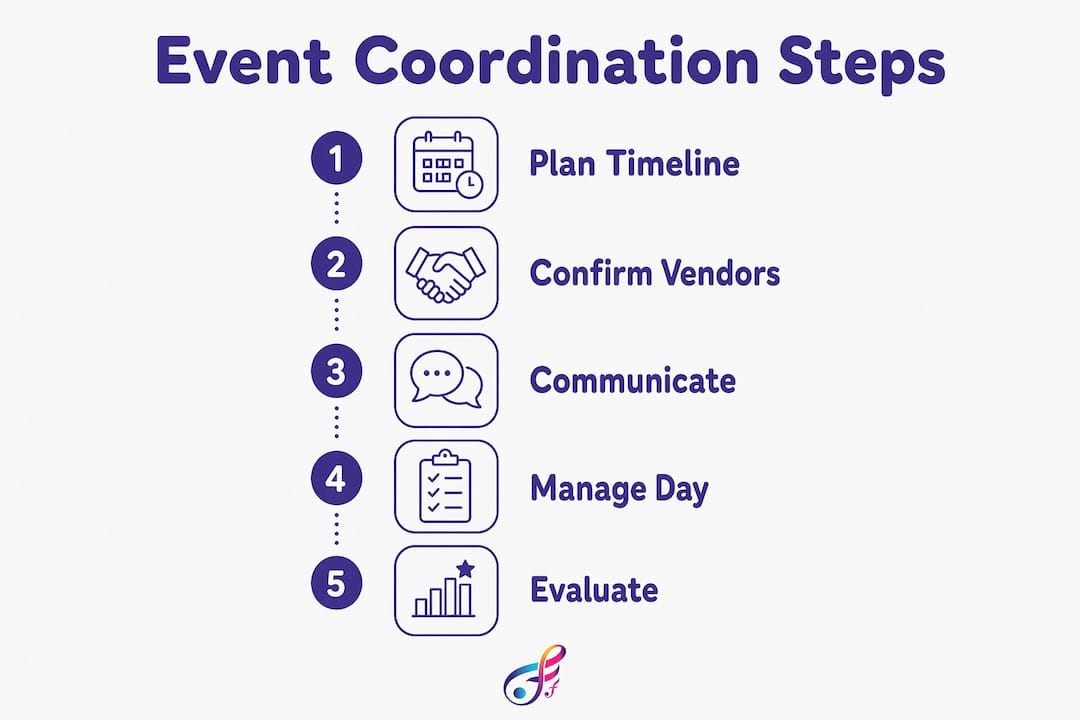
The numbered steps below summarize the vendor coordination process:
- Build the master timeline 6–8 weeks before the event
- Send written confirmation requests to all vendors at the 2-week mark
- Designate one coordinator as the single point of contact
- Schedule a vendor check-in call or walkthrough 48–72 hours before the event
- Distribute the final run-of-show document to all vendors the day before
- Conduct an on-site briefing with all staff at least one hour before doors open
Pro Tip: Create a contingency column in your master timeline. For each critical segment, note what happens if it runs 10 minutes long or a vendor arrives late. Having that decision already made saves you from freezing up on event day.
Scheduling vendor check-ins prevents last-minute issues and confirms that all arrival times are still accurate. A quick five-minute call two days before the event catches 90% of problems before they become emergencies.
How can you coordinate your own event effectively?
Coordinating your own event without a professional coordinator is entirely possible. The key is starting early and treating coordination as a separate task from planning.
Working backward from the event date to create timeline milestones 6–8 weeks ahead allows you to identify dependencies and avoid last-minute conflicts. If your venue requires a certificate of insurance from your DJ, that request needs to go out six weeks before the event, not six days before.
Common coordination pitfalls and how to avoid them:
- No written timeline: Guests and vendors operate on assumptions. Fix this by creating a one-page run-of-show and sharing it with everyone involved.
- Too many points of contact: When three people are answering vendor questions, vendors get three different answers. Assign one person to own all vendor communication.
- No buffer time: Schedules that run back-to-back have no room for reality. Build 10-minute buffers between major segments.
- Skipping the venue walkthrough: Assumptions about load-in access, power outlets, and parking cause delays. Walk the venue before event day.
- No emergency contacts list: When something goes wrong, you need phone numbers, not email addresses. Build the list before you need it.
Coordination checklists often include venue walkthroughs, emergency protocols, and vendor logistics. Using a checklist does not make you less experienced. It makes you less likely to forget the thing that derails the event. Even professional coordinators with decades of experience use them.
For those coordinating entertainment specifically, understanding the role of a corporate event DJ can help you set clearer expectations and build a more accurate timeline around entertainment setup and performance windows.
Key takeaways
Effective event coordination is the operational discipline that separates a well-planned event from a well-executed one, requiring a master timeline, written vendor confirmations, and a single point of contact to prevent avoidable failures.
| Point | Details |
|---|---|
| Coordination vs. planning | Planning sets strategy months ahead; coordination manages execution on event day. |
| Master timeline | Build a detailed schedule covering setup, program, and teardown at least 6–8 weeks out. |
| Written confirmations | Confirm all vendor arrival times and requirements in writing at least two weeks before the event. |
| Single point of contact | Assign one person to manage all vendor communication to prevent conflicting instructions. |
| Start early | Begin coordination preparation 6–8 weeks before the event to catch dependencies before they become crises. |
The part most people get wrong about event coordination
After working alongside event teams for years, the biggest misconception I see is that good planning makes coordination unnecessary. People spend months perfecting the vision and then assume the event will run itself. It never does.
The myth that planning alone ensures success ignores the complex, adaptive work coordinators perform on event day. A coordinator is not a backup plan. They are the engine that makes the plan move. The best-designed event I have ever seen nearly collapsed because no one confirmed the venue's load-in door would be unlocked at 3:00 p.m. That is a coordination failure, not a planning failure.
The other thing I have learned is that flexibility and structure are not opposites. The coordinators who handle chaos best are the ones with the most detailed timelines. They know exactly what the plan is, so they can make a fast, informed decision when reality deviates from it. Rigidity breaks. Structure bends.
If you are coordinating your own event, give yourself permission to be the person who says no to last-minute additions that break the timeline. Guests remember how an event felt, not how many things you added at the last minute. A calm, well-paced event beats a frantic one every time.
— Drew Deenie
How Fiesta Fusion supports your event coordination
Coordinating entertainment is one of the most time-sensitive parts of any event. Fiesta Fusion makes that part straightforward for couples, families, schools, and businesses across Northern Utah.

Fiesta Fusion is a veteran-owned DJ and photo booth company serving Ogden, Weber County, Davis County, and Salt Lake City. From wedding DJ services to photo booth rentals, 360 video booths, uplighting, and event enhancements, Fiesta Fusion arrives on time, communicates clearly, and works within your master timeline. Every service comes with professional setup, a dedicated point of contact, and the kind of reliability that makes your coordination job easier. Visit Fiesta Fusion to check availability and build your event package.
FAQ
What is the difference between event coordination and event planning?
Event planning focuses on strategy, budgeting, and vendor selection months before the event. Event coordination manages the on-site execution, vendor arrivals, and real-time problem-solving on event day.
How far in advance should I start event coordination?
Start building your coordination timeline 6–8 weeks before the event. This window allows you to identify scheduling dependencies and confirm vendor details before conflicts become emergencies.
What does an event coordinator do on the day of the event?
An event coordinator manages vendor arrivals, enforces the master timeline, briefs staff, and resolves unexpected issues as they arise. Their job is to keep the event running on schedule without disrupting the guest experience.
Do I need a professional coordinator for a small event?
Not necessarily. For smaller events, one organized person can handle coordination by using a written timeline, a vendor contact sheet, and a checklist. The key is treating coordination as a dedicated task, not an afterthought.
Why are written vendor confirmations so important?
Verbal agreements lead to missed deadlines and misaligned setups. Written confirmations sent at least two weeks before the event create a clear record of arrival times, setup requirements, and responsibilities for every vendor involved.