TL;DR:
- Wedding entertainment packages combine music, lighting, and interactive elements into a single service to reduce coordination issues. Full-day packages managed by one team offer seamless transitions and consistent energy from ceremony to reception. Adding lighting and photo booths enhances mood and guest engagement more effectively than upgrading audio equipment alone.
A wedding entertainment package is a bundled service agreement that combines music, atmosphere, and interactive elements into a single coordinated offering for your wedding day. Couples who book these packages instead of piecing together individual vendors report fewer coordination headaches and more consistent energy from ceremony to last dance. The industry standard for entertainment spending sits at 8–15% of the total wedding budget, which means a $30,000 wedding should allocate $2,400–$4,500 to entertainment alone. Understanding the full range of wedding entertainment package examples helps you spend that budget where it counts most.
1. What are wedding entertainment package examples?
A wedding entertainment package is any pre-structured bundle of services that covers at least two entertainment functions for your event. The industry term for these offerings is "entertainment service packages," though couples and vendors alike use the phrase interchangeably with "wedding entertainment bundles." The most common formats include DJ-only packages, live band packages, hybrid packages, and all-in-one packages that layer music with photo booths, lighting, and interactive activities.
Packages are priced in tiers. Entry-level packages cover the basics: a DJ, a sound system, and a microphone. Mid-tier packages add MC duties, custom playlists, and basic lighting. Premium packages fold in photo booths, uplighting, and a dedicated event coordinator. Knowing which tier fits your venue size and guest count is the first decision to make.
2. DJ-centered wedding entertainment packages
The DJ package is the most popular starting point for wedding entertainment. Mid-market DJ packages average $1,200–$2,000 and typically include MC duties, a custom playlist, and a professional sound system. That price point covers most four-hour receptions at venues up to 200 guests.
A standard DJ package usually includes:
- Professional DJ for 4–6 hours
- MC services for introductions and announcements
- Sound system sized for your venue
- Wireless microphones for vows and toasts
- Basic lighting (often two wash lights)
- Setup and breakdown time
The limitation of a DJ-only package is atmosphere control. A DJ can read the room and shift the music, but without uplighting or a photo booth, the visual energy stays flat between songs. Couples who want a fuller experience should ask vendors about add-on pricing before signing.
Pro Tip: Build a "do not play" list alongside your must-play list. Experienced DJs say the "do not play" list does more to personalize the night than the playlist itself.
3. Live band and hybrid entertainment packages
Live bands bring a level of energy that recorded music cannot replicate. DJ packages average $1,200–$2,500, while live bands run $3,500–$8,000 for a typical wedding. That gap is real, but the experience difference is equally real for guests who have never seen a live performance at a wedding.
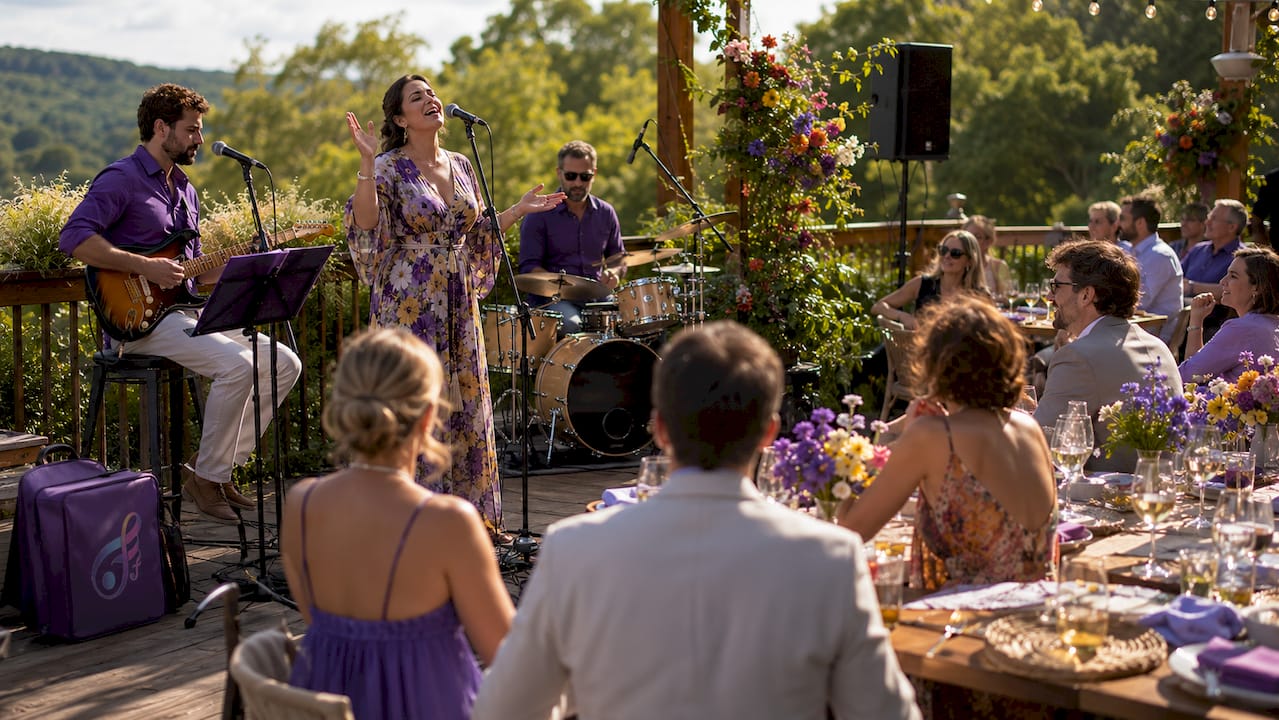
Hybrid packages blend live musicians with a DJ, and they solve the budget problem directly. Hybrid band packages typically cost $2,500–$4,000, placing them between a solo DJ and a full live band. They work especially well for smaller venues where a six-piece band would overwhelm the room acoustically.
| Format | Typical cost | Best for |
|---|---|---|
| DJ only | $1,200–$2,500 | Receptions up to 200 guests |
| Live band | $3,500–$8,000 | Large venues, high-energy receptions |
| Hybrid band + DJ | $2,500–$4,000 | Couples wanting live energy on a budget |
A hybrid package typically includes:
- 2–4 live musicians (often guitar, bass, keys, and vocals)
- DJ to fill set breaks and extend the night
- Shared sound system and monitor setup
- Coordinated set list between musicians and DJ
Pro Tip: Ask every live band or hybrid vendor to confirm backup equipment in the contract. Amplifiers fail. Microphones cut out. A professional team carries spares and you should verify that in writing before you sign.
4. All-in-one and full-day wedding entertainment packages
Full-day packages are the most comprehensive wedding entertainment package examples available. They cover every phase of your event, from the ceremony processional through the last song of the reception. Single entertainment teams reduce dead air and improve event flow by eliminating the handoff gaps that occur when you use multiple vendors.
A full-day package typically covers these phases in order:
- Ceremony music (processional, recessional, and interlude)
- Cocktail hour background music
- Dinner reception with ambient playlist
- Grand entrance and first dance
- Open dancing with DJ or live band
- Late-night set and send-off song
All-in-one packages go further by adding photo booths, uplighting, and a dedicated MC to the full-day music coverage. The logistical benefit is significant. One contract, one point of contact, and one team that knows your timeline from start to finish.
"Moving away from multiple vendors toward a single full-day team reduces coordination hassles and maintains dance floor momentum throughout the entire event. The couple should never have to manage transitions. That is the vendor's job."
The atmospheric benefit matters just as much. A team that plays your ceremony also knows the emotional tone of your day. They carry that tone into the reception instead of starting fresh with no context.
5. Non-musical entertainment packages and add-ons
Non-musical entertainment fills the gaps that music alone cannot cover. Lighting changes the mood faster than almost anything else, making uplighting and dance-floor effects among the highest-value add-ons per dollar spent. Photo booths, 360 video booths, and interactive games give guests something to do during cocktail hour and dinner when the dance floor is not yet open.
Common non-musical add-ons to bundle with your main package:
- Uplighting (typically 8–16 cans placed around the perimeter)
- Open-air photo booth with a custom print template
- 360 video booth for slow-motion guest clips
- Lawn games for outdoor cocktail hours
- LED dance floor panels for visual impact
The best approach is to segment entertainment into anchor elements (your DJ or band) and supporting elements (photo booth, games). Anchor elements drive energy. Supporting elements give guests a reason to stay engaged between dances.
| Add-on | Best timing | Primary benefit |
|---|---|---|
| Uplighting | All phases | Mood and photo quality |
| Photo booth | Cocktail hour and reception | Guest interaction and keepsakes |
| 360 video booth | Reception open dancing | Social media content and fun |
| Lawn games | Outdoor cocktail hour | Fills time before dinner |
Space allocation matters here. A 360 video booth needs roughly a 10-by-10-foot footprint. Confirm your venue's floor plan before adding it to your package. Fiesta Fusion's photo booth options include both open-air and 360 formats sized for Northern Utah venues.
Pro Tip: Plan for your entertainment team to receive a hot meal during long events. Experienced entertainers perform better when they are fed, and neglecting this detail can affect energy during your peak reception hours.
Key takeaways
The most effective wedding entertainment packages combine a strong anchor element (DJ or live band) with atmosphere add-ons (lighting and photo booths) and a single vendor team to manage flow from ceremony through reception.
| Point | Details |
|---|---|
| Budget 8–15% for entertainment | Industry data shows this range covers DJ, band, or hybrid packages at most price points. |
| Hybrid packages balance cost and energy | A hybrid band and DJ package at $2,500–$4,000 delivers live energy without a full band price tag. |
| Full-day packages reduce vendor gaps | One team covering ceremony through reception eliminates dead air and coordination stress. |
| Add lighting before adding more music | Uplighting and dance-floor effects improve mood and photos faster than upgrading your DJ tier. |
| Confirm backup equipment in writing | Professional contracts should specify backup amplifiers and microphones to prevent dead air incidents. |
What I have learned booking wedding entertainment across hundreds of events
By Drew Deenie
Couples almost always underestimate how much the transitions matter. The gap between the ceremony ending and the cocktail hour starting, the shift from dinner music to open dancing, the moment the DJ calls everyone to the dance floor for the first time. Those transitions are where energy dies if the entertainment team is not prepared.
The single biggest mistake I see is booking the anchor element (a great DJ or band) and then leaving the transitions to chance. A full-day package solves this because the same team manages every phase. They know your timeline, your song choices, and your guests' energy level. No handoff, no dead air, no awkward silence while someone figures out who is supposed to be playing.
My honest advice: if your budget forces a choice between a fancier DJ setup and a full-day package with a simpler setup, take the full-day package every time. Guests remember how the night felt, not the quality of the speaker brand. A well-planned entertainment flow creates that feeling. Equipment specs do not.
One more thing couples rarely ask about: what happens if something breaks. Ask every vendor directly what their backup plan is for equipment failure. The answer tells you everything about their professionalism. A vendor who hesitates or says "that has never happened" is a vendor who has not thought it through.
— Drew Deenie
Fiesta Fusion's wedding entertainment packages for Northern Utah couples
Fiesta Fusion is a veteran-owned entertainment company serving Ogden, Weber County, Davis County, and Salt Lake City. The team offers wedding DJ services, photo booth rentals, 360 video booths, uplighting, and event enhancements that can be bundled into a single package for your wedding day.
Couples planning weddings in Northern Utah can check availability and request a customized quote directly through Fiesta Fusion. The company's 360 photo booth is one of the most requested add-ons for 2026 receptions, and it pairs with any DJ or hybrid music package. Pricing is listed transparently, and the team works with you to match the package to your venue size, guest count, and timeline. Visit Fiesta Fusion's enhancements page to see the full list of add-ons available for your wedding.
FAQ
What is a wedding entertainment package?
A wedding entertainment package is a bundled service agreement that combines two or more entertainment functions, such as a DJ, MC duties, lighting, and a photo booth, into a single booking. Packages simplify planning by reducing the number of vendors you coordinate with.
How are wedding entertainment packages priced?
Packages are priced by tier based on included services, hours of coverage, and vendor experience. DJ-only packages average $1,200–$2,500, hybrid band packages run $2,500–$4,000, and full live band packages range from $3,500–$8,000.
What is a wedding entertainment contract?
A wedding entertainment contract is the legal agreement between you and your entertainment vendor that specifies services, hours, payment terms, cancellation policies, and technical requirements including backup equipment. Always confirm backup hardware is listed in the contract before signing.
What are the top wedding entertainment add-ons for 2026?
Uplighting, open-air photo booths, and 360 video booths are the most requested add-ons for 2026 weddings. These elements improve guest engagement during cocktail hour and dinner before the dance floor opens.
Should I book a full-day package or separate vendors?
A full-day package from a single vendor team reduces coordination gaps and maintains consistent energy from ceremony through reception. Separate vendors can work, but they require more active management from the couple on the wedding day itself.