TL;DR:
- Event entertainment creates emotional peaks and shared moments that increase guest engagement and event memory. It also significantly boosts ROI by fostering social connection and strengthening participant experience. Planning entertainment early and focusing on emotional highs and memorable endings maximize event impact.
Event entertainment is defined as the planned programming that drives emotional engagement, social connection, and lasting memory at any gathering. It is the single factor that separates a forgettable event from one guests talk about for years. Regular attendance at live music events improves personal well-being by 21%, and 52% of business leaders identify events as the marketing channel with the greatest ROI, driven primarily by entertainment. Fiesta Fusion, a veteran-owned DJ and event company serving Northern Utah, works with couples, schools, and corporations every week who discover this truth firsthand. Understanding why event entertainment matters is the first step toward planning an event that actually works.
Why event entertainment matters for attendee engagement
Entertainment is the primary mechanism through which guests move from passive attendance to active participation. Without it, even a well-catered, beautifully decorated event stays flat. With it, guests form real connections, feel genuine emotion, and leave with a sense that the event meant something.
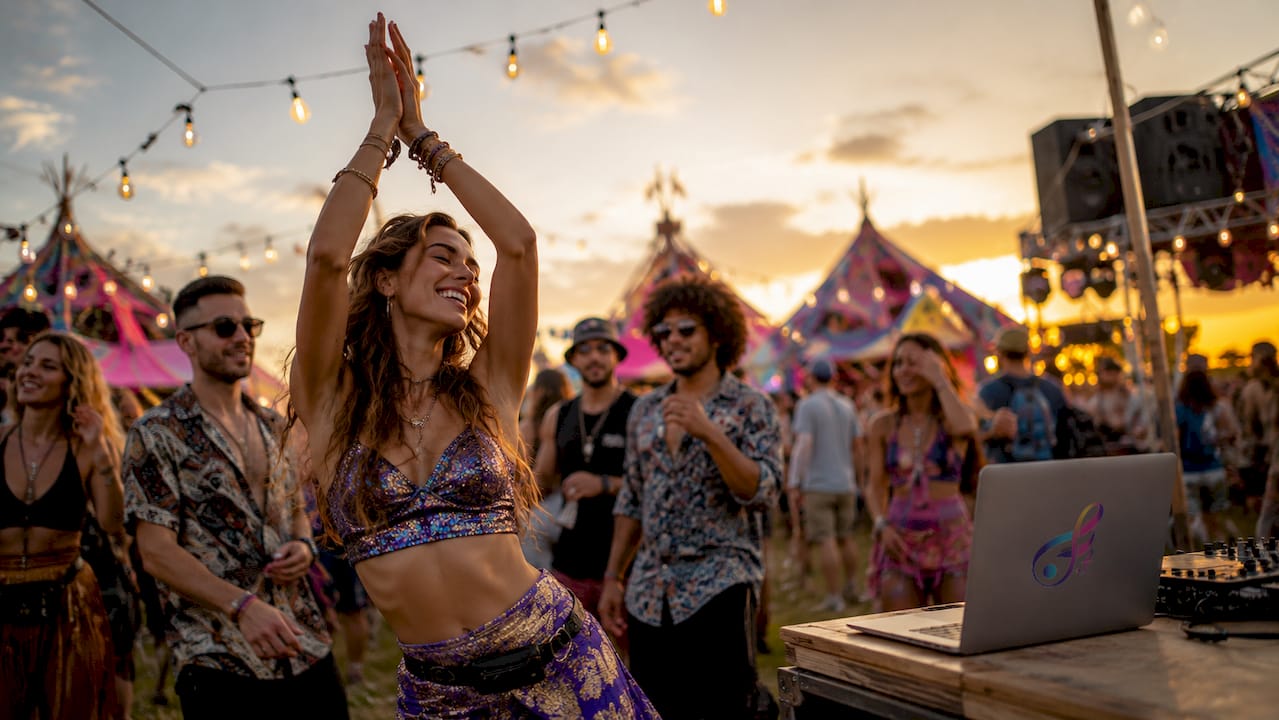
The psychological concept behind this is called collective effervescence, a term coined by sociologist Émile Durkheim to describe the shared emotional energy that emerges when people experience something together. Research confirms that collective effervescence during live music is the strongest predictor of enjoyment and meaning at events, outperforming even experiences of awe. That finding matters because it tells planners exactly where to invest: not in more decorations, but in shared, emotionally charged moments.
Neuroscience adds another layer. Live music triggers stronger brain synchronization with rhythm compared to recorded music. That synchronization correlates directly with higher pleasure levels and stronger memory encoding. When guests' brains sync up during a live performance, they are literally sharing the same neurological experience. That is the foundation of genuine social bonding.
"Live music provides a shared intense experience that promotes collective joy and social cohesion, vital in times of cultural polarization." — British Psychological Society Research Digest
Entertainment also functions as an energy management tool at corporate events, breaking down professional barriers and creating authentic connection between colleagues. A well-timed DJ set or interactive photo booth moment does more for team cohesion than a scheduled icebreaker ever will. The impact is immediate and measurable in the room.
- Live music and interactive entertainment trigger collective effervescence, the strongest predictor of event enjoyment
- Synchronized brain activity during live performances enhances both pleasure and memory retention
- Entertainment breaks social barriers faster than structured networking activities
- Wedding entertainment options and corporate formats both rely on the same psychological principles
What is the ROI of investing in event entertainment?
The business case for entertainment is clear and well-documented. 52% of business leaders rank events as their highest-ROI marketing channel, and entertainment is the primary driver of that result. That number reflects something planners often underestimate: entertainment does not just make events fun, it makes them effective.
Industry analysis recommends allocating 5–15% of the total event budget to entertainment. That range accounts for the difference between a basic DJ setup and a full production with lighting, photo booths, and interactive elements. The return shows up in proxy metrics that matter to organizations: employee retention, collaboration rates, and pipeline growth from client-facing events.
- Define your entertainment ROI goals before booking anything. Decide whether you are measuring employee satisfaction, client conversion, or brand recall. Each goal points to a different entertainment format.
- Align entertainment type with business outcomes. A 360 video booth drives social media reach. Uplighting and custom monograms reinforce brand identity. A skilled DJ controls energy and pacing throughout the event.
- Track proxy metrics after the event. Survey attendees on connection and satisfaction. Monitor whether team collaboration improves in the weeks following a corporate event.
- Budget for entertainment as a line item, not an afterthought. Planners who treat entertainment as optional often cut it first. That decision consistently produces the weakest events.
Interactive entertainment delivers higher ROI than passive entertainment because it automatically creates engagement and connection. A photo booth generates shareable content. A DJ who reads the room keeps energy high through transitions. These are not luxuries. They are the mechanisms through which events achieve their goals.
Pro Tip: Define your entertainment ROI metric before you finalize the budget. Linking entertainment spend to a specific outcome, such as employee retention or client pipeline, makes budget approval far easier and keeps planning focused.
Common mistakes in event entertainment planning
The most damaging mistake in event entertainment planning is treating entertainment as a logistical checkbox. Planners who book a DJ or a band and then stop thinking about entertainment have missed the point entirely. Entertainment is not a vendor category. It is an experience architecture decision.
- Ignoring audience demographics. A playlist built for a 30-year-old corporate crowd will fall flat at a quinceañera. Entertainment must match the audience's age, culture, and expectations.
- Skipping the emotional arc. Events need peaks and valleys. A flat energy level throughout the evening produces a forgettable experience. Plan for at least one high-energy peak and a strong closing moment.
- Treating entertainment as background. Background music fills silence. Entertainment creates moments. The difference is intentionality. A DJ who announces key moments, cues lighting changes, and reads the crowd is delivering entertainment. A playlist on shuffle is not.
- Failing to define ROI goals. Failing to link entertainment to business metrics is the most common reason entertainment budgets get cut. When entertainment has no measurable purpose, it looks like a cost rather than an investment.
- Overlooking the closing moment. Guests remember how an event ends more vividly than almost anything else. A weak closing undermines everything that came before it.
Pro Tip: Match entertainment format to event tone before you match it to budget. A high-energy DJ is the right call for a school dance or wedding reception. A more ambient, interactive setup fits a corporate cocktail hour. Getting this wrong costs more than the entertainment itself.
The role of music at birthday parties follows the same logic as corporate events: the wrong entertainment format creates awkwardness, while the right one creates moments guests replay in conversation for months.
How to design event entertainment that creates lasting memories
Memory science gives event planners a concrete framework for designing entertainment that sticks. The key principle is Daniel Kahneman's Peak-End Rule: people remember the most emotionally intense moment of an experience and how it ended, not the average of everything that happened. This finding has direct implications for entertainment sequencing.
| Entertainment element | Emotional impact | Memory function |
|---|---|---|
| Live DJ performance | High energy, crowd synchronization | Creates the peak moment |
| 360 video booth | Surprise and delight | Anchors a memorable mid-event high |
| Custom monogram lighting | Visual identity reinforcement | Sets tone and signals occasion |
| Photo booth activation | Interactive, social sharing | Extends memory beyond the event |
| Closing song or moment | Emotional resolution | Defines the end memory |
Emotional arousal triggers neurochemical responses that encode memories more durably. That is why a surprise performance or an unexpected lighting reveal lands harder than a scheduled agenda item. Designing entertainment as targeted emotional peaks is the method experienced planners use to anchor attendee memory and maximize event impact.
Surprise elements work especially well because novelty amplifies the neurochemical response. A guest who expects a standard reception and gets a synchronized lighting moment tied to the first dance will remember that event differently than one where everything went exactly as anticipated. The gap between expectation and experience is where memory forms.
Pro Tip: Plan your entertainment sequence around two non-negotiables: the peak moment and the closing moment. Everything else can flex. These two anchors determine what guests remember 30 days later.
Event lighting is one of the most underused tools for creating emotional peaks. Color, intensity, and timing all influence how guests feel at specific moments. Pairing lighting changes with entertainment cues creates a multi-sensory experience that encodes more strongly in memory than audio alone.
Key Takeaways
Event entertainment is the primary driver of attendee engagement, emotional memory, and measurable event ROI, making it a planning priority rather than an optional add-on.
| Point | Details |
|---|---|
| Entertainment drives memory | Attendees remember peak emotional moments and final experiences most vividly, per the Peak-End Rule. |
| Wellbeing impact is real | Live event attendance improves personal well-being by 21%, making entertainment a health-positive investment. |
| ROI is measurable | 52% of business leaders rank events as their highest-ROI marketing channel, led by entertainment quality. |
| Interactive beats passive | Interactive entertainment creates automatic engagement and connection, delivering stronger outcomes than passive formats. |
| Budget allocation matters | Allocating 5–15% of the event budget to entertainment is the industry-recommended range for strategic impact. |
What I've learned from watching entertainment make or break events
I have watched hundreds of events from the inside, and the pattern is consistent. The events people remember are not the ones with the best food or the most expensive venue. They are the ones where something happened that felt alive. A DJ who pulled a crowd onto the floor at 9 PM when the energy was dying. A photo booth that turned strangers into a group laughing together. A lighting moment that made a bride stop and catch her breath.
What most planners get wrong is thinking about entertainment last. They finalize the venue, the catering, the florals, and then ask what is left in the budget for entertainment. That sequence produces mediocre results every time. Entertainment should be one of the first decisions, because it shapes everything else: the room layout, the timeline, the energy arc of the entire evening.
The industry is moving toward experiential and interactive formats, and that shift is not a trend. It is a response to what research keeps confirming: people want to feel something at events, not just attend them. A 360 video booth is not a gimmick. It is a moment of collective delight that guests share on social media and talk about the next day. That is the significance of entertainment in events, and it is not something you can replicate with a better centerpiece.
My honest advice: treat entertainment as the event's emotional engine. Everything else supports it.
— Drew Deenie
Fiesta Fusion's event entertainment solutions for Northern Utah
Fiesta Fusion brings professional event entertainment to weddings, corporate events, quinceañeras, and school dances across Weber County, Davis County, and Salt Lake City. Every service is designed to create the emotional peaks and memorable moments that research confirms guests carry with them long after the event ends.
From custom monogram lighting that anchors your event's visual identity to 360 photo booths that generate shareable moments of pure delight, Fiesta Fusion builds entertainment programs around your specific audience and goals. The team also offers uplighting, event enhancements, and full DJ services tailored to the tone and scale of your event. If you are planning an event in Northern Utah and want entertainment that actually moves people, Fiesta Fusion is ready to help you build something worth remembering.
FAQ
What does event entertainment include?
Event entertainment includes any planned programming designed to engage guests emotionally and socially, such as DJ performances, live music, photo booths, lighting design, and interactive experiences. The goal is to create shared moments that drive connection and lasting memory.
Why hire professional event entertainment instead of a playlist?
Professional entertainment reads the room, controls energy pacing, and creates intentional emotional peaks that a static playlist cannot deliver. Research shows live and professionally managed entertainment triggers stronger brain synchronization and higher pleasure levels than recorded music alone.
How much of an event budget should go to entertainment?
Industry analysis recommends allocating 5–15% of the total event budget to entertainment, depending on event scale and goals. Planners who treat entertainment as a budget priority consistently produce events with stronger attendee satisfaction and measurable ROI.
What is the Peak-End Rule and why does it matter for event planning?
The Peak-End Rule, developed by psychologist Daniel Kahneman, states that people remember the most emotionally intense moment of an experience and how it ended. For event planners, this means designing at least one strong entertainment peak and a memorable closing moment is non-negotiable.
How does entertainment improve corporate event outcomes?
Corporate entertainment improves employee retention, breaks down professional barriers, and creates authentic connection among colleagues. Business leaders who link entertainment spend to proxy metrics like retention and collaboration consistently find stronger budget justification and better post-event results.