
TL;DR:
- Party rental companies supply temporary event equipment and manage delivery, setup, and pickup for various occasions. Building a good relationship with them, booking early, and clarifying logistics ensure a successful event. They are essential partners that provide the physical foundation for the entire celebration.
A party rental company is defined as a service provider that supplies temporary event equipment, including tents, tables, chairs, lighting, and decor, for a specific event duration. Rather than buying costly items you will use once, you rent them for the day or weekend and return them when the event ends. This model serves weddings, corporate events, quinceañeras, school dances, and outdoor festivals alike. Understanding what a party rental company does, and how to work with one effectively, is the first step toward planning an event that runs without a hitch.
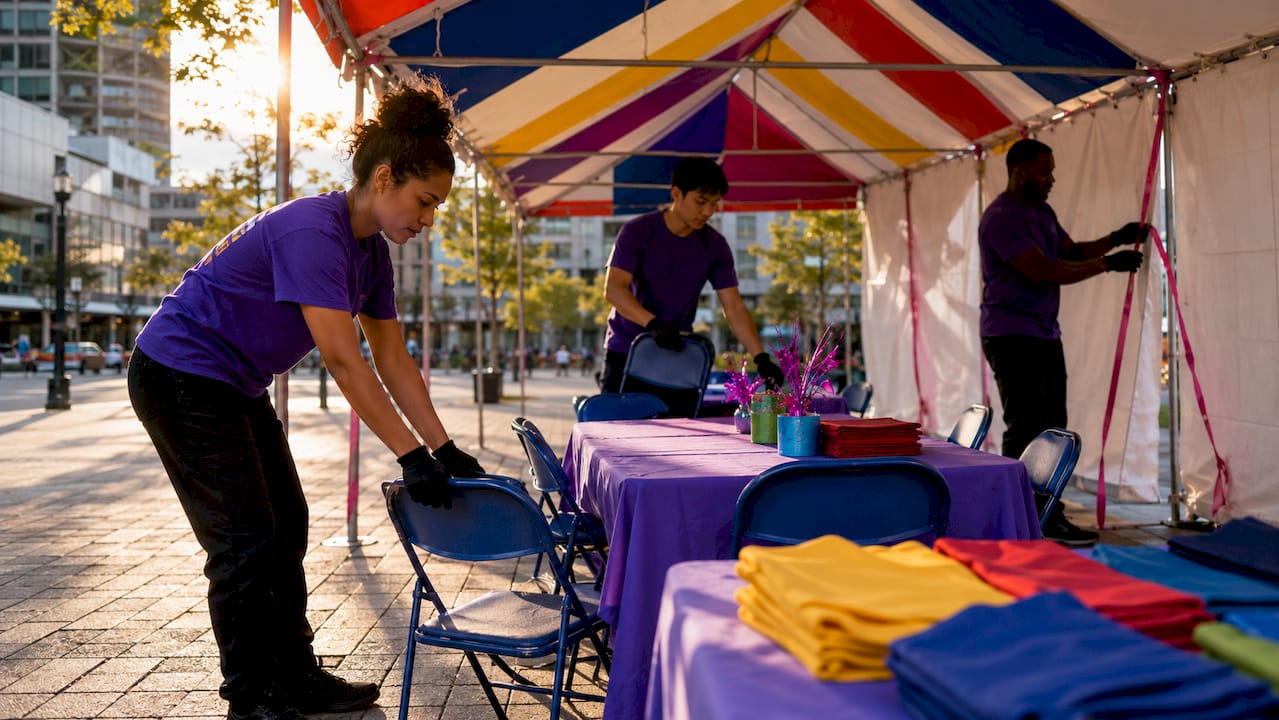
What is a party rental company and what does it do?
A party rental company provides temporary access to essential event equipment for a defined period, then handles delivery, setup, and pickup so you do not have to. The industry term for this business category is "event rental services," though most planners and hosts use "party rental" interchangeably. Established companies manage inventory ranging from small 10x10 canopies to festival structures up to 60x300 feet, with some maintaining over 1 million rental items. That scale means a single vendor can supply nearly everything a large event requires.
The core value proposition is simple. Buying 200 folding chairs for one wedding makes no financial sense. Renting them for a weekend does. The rental company absorbs the cost of storage, maintenance, and replacement, and you pay only for the time you need the items.
What services and equipment do party rental companies offer?
Party equipment rental catalogs cover far more than tables and chairs. Most full-service companies offer the following categories:
- Furniture: Folding chairs, Chiavari chairs, farm tables, cocktail tables, and lounge seating
- Tents and structures: Frame tents, pole tents, clear-span tents, and canopies for outdoor events
- Lighting: String lights, uplighting, spotlights, and dance floor lighting
- Linens and decor: Tablecloths, chair covers, centerpieces, backdrops, and themed decor
- Audiovisual equipment: Speakers, microphones, projectors, and screens
- Dance floors: Portable hardwood, LED, or black-and-white checkered panels
- Specialty items: Photo booths, 360 video booths, and custom monogram lighting
Delivery, installation, and pickup are core parts of the rental service, not optional add-ons. Professional crews handle setup in a specific order, follow venue layout plans, and return after the event to collect everything. This eliminates post-event cleanup stress for hosts.
Service customization depends on event type and size. A backyard birthday party might need only a tent and 50 chairs. A corporate gala for 500 guests requires a full audiovisual package, staging, and custom lighting. Most rental companies scale their offerings to match both budgets and guest counts.
Pro Tip: Ask your rental company for a scaled floor plan before the event. Many full-service providers will map out table placement, tent positioning, and lighting zones so you can visualize the setup before delivery day.
How do party rental companies manage logistics?
Party rental operations run on a model called inventory turnover, which measures how many times each item rents per year. An eleven-dollar folding chair that rents for two dollars pays for itself in roughly six rentals and earns revenue for years afterward. That economics model drives every decision about what items a company stocks, how it prices rentals, and how it manages wear and replacement.
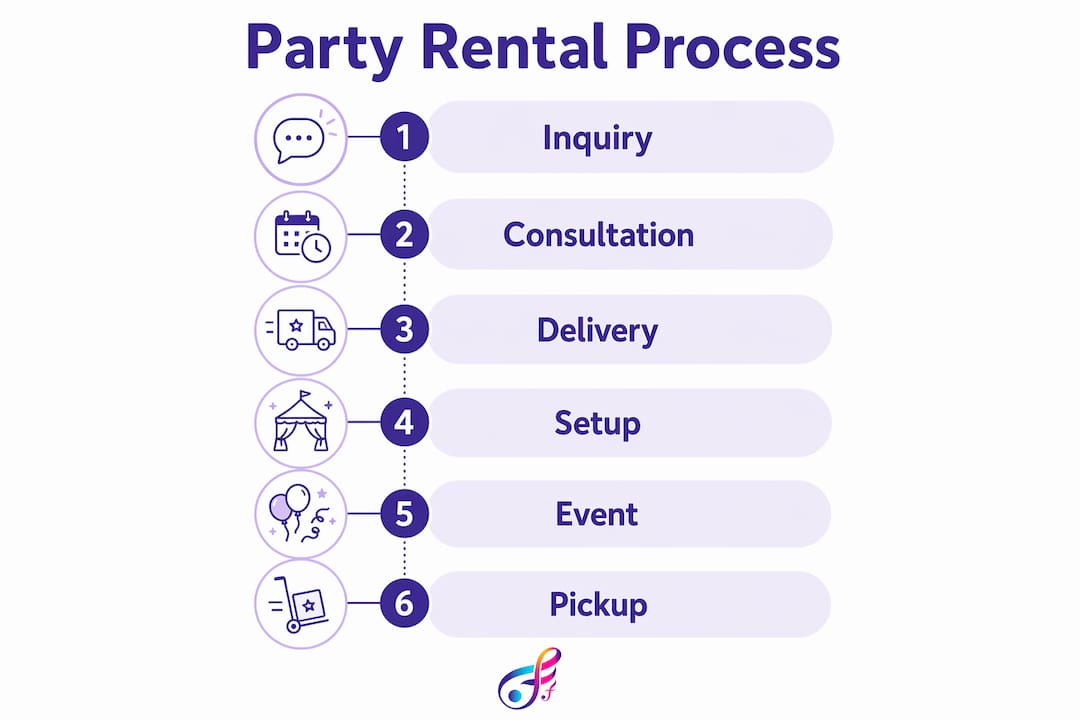
Logistics coordination is where professional rental companies earn their fees. Here is how the process typically works:
- Booking and inventory confirmation: The company reserves your items and removes them from available stock.
- Pre-event walkthrough: Staff review the venue layout, access points, and setup sequence.
- Delivery scheduling: Trucks arrive within a confirmed window, often the day before the event.
- Setup: Crews assemble tents, arrange furniture, install lighting, and test audiovisual equipment.
- Event day standby (optional): Some companies offer on-call support for last-minute adjustments.
- Pickup: Crews return after the event to break down and collect all items.
Late rental bookings often cause inventory shortages during peak seasons, making early scheduling critical to guarantee availability. Peak seasons in most U.S. markets run from may through october, with june and september seeing the highest demand for wedding and outdoor event rentals. Booking three to six months in advance is standard practice for large events.
Coordinating with other vendors adds another layer of complexity. The rental company must know when the caterer arrives, when the florist needs table access, and what the venue's load-in rules are. Professional rental coordinators manage this communication proactively, which reduces conflicts on event day.
How can you work with a party rental company effectively?
The most successful events happen when planners treat rental companies as partners, not just order-takers. Communication, reliability, and collaboration are the three qualities that define a strong rental partnership. A rental partner who anticipates problems and shares knowledge makes your role as a planner significantly easier.
Here are the practices that consistently produce better outcomes:
- Book immediately after securing your venue. Inventory fills fast, especially for popular items like Chiavari chairs, clear-span tents, and LED dance floors.
- Assign a single point of contact. One person on your team should handle all communication with the rental company to prevent conflicting instructions.
- Confirm vendor arrival times 48 hours before the event. Professional event planners recommend this step to avoid setup conflicts and reduce last-minute anxiety.
- Conduct a venue walkthrough with the rental coordinator. Walking the space together surfaces access issues, power outlet locations, and layout conflicts before delivery day.
- Share your full vendor list. The rental company needs to know who else is working the event and when they arrive.
- Clarify what "setup" includes. Some companies deliver and stack items; others fully assemble and arrange everything. Confirm this in writing before signing a contract.
Common mistakes include vague contracts, assuming items are included when they are not, and failing to account for setup time in the event schedule. A tent that takes four hours to erect cannot be delivered the morning of a noon ceremony.
Pro Tip: When reviewing your rental contract, check whether damage waivers cover accidental breakage or only manufacturing defects. Knowing this upfront prevents billing surprises after the event.
Rental companies that build strong relationships with planners often provide priority booking, flexible terms, and emergency equipment replacement. Trust built over multiple events translates directly into better service when something goes wrong under a tight timeline.
What are the main types of party rentals and when to use each?
Common rental categories include furniture, tents, lighting, audiovisual equipment, and decor, with each category serving different event goals. Choosing the right rental type depends on your guest count, venue type, aesthetic, and function. The table below maps each category to its best use cases.
| Rental category | Best for | Key benefit |
|---|---|---|
| Furniture (tables, chairs, lounge sets) | Weddings, corporate dinners, birthday parties | Provides seating and dining infrastructure for any guest count |
| Tents and structures | Outdoor weddings, festivals, graduation parties | Creates a weather-protected venue on any open property |
| Lighting (uplighting, string lights, monograms) | Weddings, quinceañeras, corporate galas | Sets the visual tone and transforms plain spaces |
| Audiovisual (speakers, projectors, screens) | Corporate events, school dances, presentations | Delivers clear sound and visuals for large or technical programs |
| Photo booths and 360 video booths | Birthdays, weddings, school events, corporate parties | Adds interactive entertainment and branded keepsakes |
| Decor (linens, backdrops, centerpieces) | Any event requiring a specific theme or aesthetic | Ties the visual design together without permanent purchases |
Lighting deserves special attention because it affects every other visual element in the room. Indoor party lighting can shift a plain banquet hall into a warm, intimate space or a high-energy dance environment depending on color and placement. Renting uplighting or custom monogram projections is one of the highest-impact, lowest-cost upgrades available for any event.
For outdoor events, tent selection depends on the season, expected weather, and ground surface. Frame tents work on concrete or pavement. Pole tents require staking into grass or soil. Clear-span tents offer the most interior space without center poles, making them the preferred choice for large seated dinners.
Key Takeaways
A party rental company is your most practical tool for building a complete event environment without buying equipment you will never use again.
| Point | Details |
|---|---|
| Core definition | Party rental companies supply temporary event equipment and handle delivery, setup, and pickup. |
| Book early | Inventory shortages during peak seasons make booking three to six months ahead the standard practice. |
| Treat them as partners | Rental companies that know your event goals provide better service and handle emergencies more effectively. |
| Confirm logistics in writing | Clarify setup scope, arrival windows, and damage policies before signing any contract. |
| Match rental type to event | Choose furniture, tents, lighting, or audiovisual equipment based on venue type, guest count, and event goals. |
Why rental companies are the most underrated part of event planning
Most event planning guides focus on catering, flowers, and entertainment. Rental companies rarely get the credit they deserve, and that is a planning mistake I see repeated constantly. The rental company is often the first vendor on site and the last one to leave. They set the physical stage for everything else that happens.
The planners I have seen run the smoothest events treat their rental coordinator the way they treat their venue manager: with consistent communication, clear expectations, and genuine respect for their expertise. When a rental company knows you value their input, they show up differently. They flag potential problems before you ask. They suggest layout changes that improve guest flow. They call you the day before to confirm, not the morning of.
I have also noticed that effective rental companies see themselves as partners fighting for the event's success, not just vendors fulfilling an order. That mindset shows up in small ways: an extra chair delivered as a buffer, a lighting adjustment made without being asked, a pickup crew that works quietly during the final hour of a reception. Those details do not appear in any contract. They come from a relationship built on trust.
My advice is to find a rental company you like working with and stay loyal to them. Repeat clients get priority booking, better rates, and the kind of flexibility that saves events when something goes wrong. That relationship is worth more than any discount you might find by shopping around every year.
— Drew Deenie
Fiesta Fusion brings your event vision to life
Planning an event in Northern Utah means you need a rental partner who understands the full picture, from the first chair placed to the last song played. Fiesta Fusion is a veteran-owned company serving Ogden, Weber County, Davis County, and Salt Lake City with photo booth rentals, 360 video booths, uplighting, DJ services, and event enhancements for weddings, quinceañeras, school dances, and corporate events.
Whether you need a custom monogram to personalize your reception or an interactive photo booth that keeps guests engaged all night, Fiesta Fusion delivers reliable, professional service for events of every size. Visit fiestafusion.com to browse available rentals and check availability for your event date.
FAQ
What is a party rental company in simple terms?
A party rental company supplies temporary event equipment, such as tents, chairs, lighting, and decor, and handles delivery, setup, and pickup so hosts do not have to buy or store items themselves.
How early should you book a party rental company?
Booking three to six months in advance is standard for large events. Peak season demand, particularly from may through october, causes inventory shortages for popular items like tents and specialty chairs.
What types of party rentals are most common?
The most common rental categories are furniture, tents, lighting, audiovisual equipment, and decor. Each category suits different event types, from formal wedding receptions to casual outdoor birthday parties.
How does a party rental company handle setup and pickup?
Most full-service rental companies deliver items within a confirmed window, assemble everything according to a venue layout plan, and return after the event to break down and collect all equipment.
What should you confirm before signing a rental contract?
Confirm what "setup" includes, clarify damage waiver terms, verify delivery and pickup windows, and get all vendor arrival times in writing at least 48 hours before the event.