TL;DR:
- A birthday party entertainment checklist helps parents plan activities, vendors, and timing to keep kids engaged. It advises matching entertainment to age groups, allocating 90 minutes to two hours for the event, and vetting performers thoroughly for safety. Focusing on a few key moments and simple activities creates memorable parties without stress or chaos.
A birthday party entertainment checklist is the planning tool that separates a chaotic, forgettable party from one kids talk about for months. It covers every decision parents face: which activities to book, how long the party should run, which entertainers to vet, and how much to spend. Most parents plan within 1–4 weeks, and the ones who finish stress-free start with a clear entertainment plan. This guide gives you that plan, built around age-appropriate timing, safety standards, and budget reality.
1. What goes on a birthday party entertainment checklist?
A birthday party entertainment checklist is your master document for every activity, performer, and experience you plan to include. Think of it as an event planning checklist specifically built around keeping kids engaged from the moment they walk in to the moment they leave with a goody bag.
The checklist covers six core categories:
- Entertainment type (DJ, magician, face painter, craft station, photo booth)
- Activity timing (when each activity starts and how long it runs)
- Age appropriateness (what works for toddlers versus tweens)
- Vendor vetting (insurance, contracts, backup plans)
- Budget allocation (cost per activity, total cap)
- Contingency items (backup games, rainy-day plans, extra supplies)
Every item on this list has a job. If it does not keep kids engaged, calm parents, or protect you legally, cut it.
2. What entertainment options work best for kids' birthday parties?
The right birthday activity ideas depend on age, group size, and theme. A magician who wows a room of 7-year-olds will lose a group of toddlers in under two minutes. Match the entertainment format to the crowd.
For toddlers and preschoolers (ages 2–4): Bubble stations, simple parachute games, and storytime with a costumed character hold attention without overstimulation. Keep activities short, under 10 minutes each.
For school-age kids (ages 5–10): This is the sweet spot for themed party entertainment. Scavenger hunts, relay races, craft stations, and interactive performers like magicians or science show hosts all land well. A DJ who takes song requests adds energy and gives kids a sense of control over the room.
For tweens (ages 10–13): Photo booths, dance-offs, trivia games, and escape-room-style challenges work better than traditional party games. This age group wants to feel cool, not babyish.
Popular entertainment formats worth adding to your checklist:
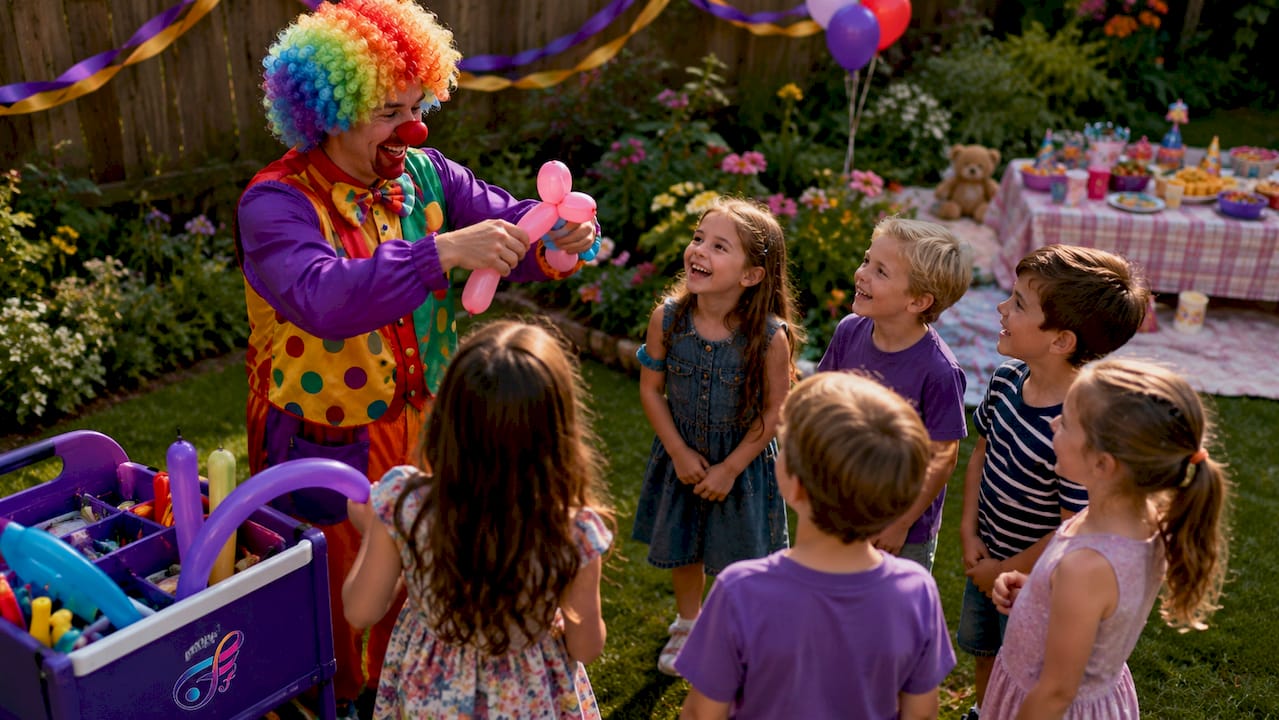
- Live performers: Magicians, clowns, face painters, balloon artists
- Interactive stations: Craft tables, slime labs, cookie decorating
- Music and dance: DJ sets, freeze dance, karaoke
- Photo experiences: 360 video booths, open-air photo booths
- Outdoor games: Relay races, obstacle courses, water balloon stations
- Structured games: Musical chairs, pin the tail, scavenger hunts
Effective kids' parties balance structured activities with free play. Over-scheduling causes stress for kids and parents alike. Build in at least one 15-minute free play window so kids can decompress between activities.
Pro Tip: When planning competitive games, provide prizes for all participants to avoid emotional meltdowns from kids who lose. Small prizes like stickers or pencils work perfectly.
3. How much time should you allocate for birthday party entertainment?
Party length is the most underestimated factor in kids' event planning. Too short and guests feel rushed. Too long and kids hit a wall, especially the younger ones.
Experts recommend 90 minutes for toddlers and preschoolers, with a hard cap of 2 hours for kids ages 1–12. That limit exists for a real reason. Young children have a finite attention window, and parties that push past it end in tears, tantrums, and exhausted parents.
| Age group | Recommended party length | Structured activities |
|---|---|---|
| Ages 2–3 | 60–90 minutes | 1–2 short activities |
| Ages 4–7 | 90–120 minutes | 3–4 guided activities |
| Ages 8–10 | 90–120 minutes | 2–3 activities plus free play |
| Ages 11–13 | Up to 2 hours | 2 structured, rest self-directed |
Children aged 4 to 7 need 3–4 structured activities during a 2-hour party to prevent chaos. That is not a suggestion. Without structure, this age group defaults to running, yelling, and conflict.
A solid party flow looks like this: arrival and free play (15 minutes), structured activity one (20 minutes), structured activity two (20 minutes), food and cake (25 minutes), prizes and goodbyes (15 minutes). Adjust based on your specific age group and venue.
Pro Tip: Schedule the most exciting activity right after arrival. Kids who are immediately engaged set a positive tone for the whole group.
4. What safety and professionalism factors matter when hiring party entertainers?
Hiring a performer without checking their credentials is one of the most common and costly mistakes parents make. A fun-looking clown with no insurance becomes your legal problem the moment something goes wrong at your venue.
Hosts must request liability insurance and background checks before booking any entertainer for a children's event. This is non-negotiable. Liability insurance protects you if a performer causes property damage or injury. Background checks confirm the person working with your children has a clean record.
Go one step further and request an "additional insured" endorsement on the entertainer's policy. This endorsement extends their coverage to include you and your venue. Without it, your venue could be held liable even when the entertainer caused the problem.
Your entertainer contract must include:
- Backup performer policy: What happens if the booked performer cancels?
- Cancellation terms: Full refund, partial refund, or credit?
- Arrival and setup time: At least 30 minutes before guests arrive
- Performance duration: Exact start and end times
- Payment schedule: Deposit amount and final payment deadline
Confirm entertainer contracts include backup performers and cancellation policies before you sign. A verbal agreement means nothing when a magician calls in sick two hours before your party starts.
"Always ask entertainers for proof of insurance before you pay a deposit. A legitimate professional will have documentation ready. Anyone who hesitates or makes excuses is a red flag. Your child's safety and your legal protection both depend on this one step."
If you are hiring a DJ, read up on how to hire a DJ for a birthday party to know exactly what questions to ask before signing anything.
5. How to budget entertainment spending for a birthday party
Entertainment is the one area where cutting corners directly hurts the party. Decorations can be simple. Food can be casual. But flat, boring entertainment is the thing kids and parents remember for the wrong reasons.
Basic children's party entertainment packages start around $31 per activity. That benchmark helps you build a realistic budget before you start calling vendors. A two-hour party with three activities puts your entertainment floor at roughly $90 to $150 before any premium add-ons.
Budget categories to include in your entertainment checklist:
- Performer fees: Magician, DJ, face painter, character appearance
- Interactive stations: Craft supplies, photo booth rental, game equipment
- Prizes and giveaways: Goodie bags, game prizes, participation awards
- Music and lighting: DJ equipment, uplighting, sound system rental
- Contingency fund: 10–15% of total budget for last-minute needs
Spend on what guests experience, not what they photograph. A photo-worthy balloon arch costs money and attention. A DJ who reads the room and keeps kids dancing costs similar money and creates actual memories. Prioritize entertainment that matters over décor that gets forgotten.
Always choose insured, professional vendors over cheaper unverified options. A $50 savings on a performer is not worth the risk of an uninsured incident at your home or rented venue.
Key takeaways
A well-built birthday party entertainment checklist is the single most effective tool for creating a party that kids enjoy and parents actually survive.
| Point | Details |
|---|---|
| Match activities to age | Toddlers need 60–90 minutes; school-age kids need 3–4 structured activities in 2 hours. |
| Vet every entertainer | Require liability insurance, background checks, and an additional insured endorsement before booking. |
| Budget by activity | Children's entertainment starts around $31 per activity; plan for 3 categories minimum. |
| Balance structure and free play | Over-scheduling causes stress; build in at least one 15-minute free play window. |
| Lock in contracts early | Confirm backup performers, cancellation policies, and exact timing in writing before paying a deposit. |
What I've learned from watching hundreds of parties succeed and fail
The parents who pull off the best parties are not the ones who spend the most. They are the ones who plan the first 60 seconds.
The arrival moment sets the emotional tone for the entire event. I have watched beautifully decorated parties fall apart because the first 10 minutes were chaotic. Kids arrived, had nothing to do, and the energy turned anxious before the birthday child even blew out a candle. The fix is simple: have one activity running the moment guests walk in. A craft table, a bubble station, or a DJ playing familiar songs works perfectly.
The second thing I see parents get wrong is over-scheduling. They book a magician, a face painter, a craft station, and a dance competition for a 90-minute party. Kids do not get to breathe. The party feels like a sprint, and by cake time, everyone is fried. Structured activities with built-in downtime produce calmer, happier kids.
My honest advice: spend your budget on one standout entertainment moment and keep everything else simple. A 360 video booth that kids can replay on the spot creates more genuine excitement than three mediocre activities stacked together. Focus on the moments that make the birthday child feel special, not the moments that look good in photos.
— Drew Deenie
Fiesta Fusion can handle the entertainment heavy lifting
Planning a birthday party is already a full-time job for a weekend. Fiesta Fusion, a veteran-owned entertainment company serving Ogden and Northern Utah, takes the hardest parts off your plate.

Fiesta Fusion's 360 photo booth rental turns any birthday party into an experience kids and parents talk about long after the cake is gone. Add custom uplighting to match your theme, and the whole room feels intentional. Fiesta Fusion serves Weber County, Davis County, and Salt Lake City with professional, insured entertainment that checks every box on your planning list. Reach out to get a quote and lock in your date before it fills up.
FAQ
What is a birthday party entertainment checklist?
A birthday party entertainment checklist is a planning document that covers all activities, performers, timing, and budget items for a child's birthday party. It helps parents stay organized and avoid last-minute gaps in the party program.
How many activities should a kids' birthday party have?
Children aged 4 to 7 need 3–4 structured activities during a 2-hour party. Older kids and tweens do well with 2 structured activities plus self-directed time.
What should I ask before hiring a party entertainer?
Ask for proof of liability insurance, a background check, and a written contract that includes backup performer policies and cancellation terms. An additional insured endorsement on their policy adds an extra layer of protection for you and your venue.
How long should a kids' birthday party last?
Experts recommend 90 minutes for toddlers and preschoolers, and no more than 2 hours for children ages 1–12. Longer parties increase the risk of exhaustion and meltdowns.
How much does birthday party entertainment cost?
Basic children's party entertainment packages start around $31 per activity. Budget for at least three entertainment categories, plus a 10–15% contingency fund for last-minute needs.