TL;DR:
- Lighting influences guest mood and directs attention at birthday parties using layered ambient, task, and accent lights. Proper color temperature and strategic zone setup create a memorable, energetic atmosphere suitable for each age group and theme. Budget-friendly options like fairy lights and uplights can significantly enhance celebration ambiance with intentional placement.
Lighting is the single most powerful tool for shaping atmosphere at a birthday party. The role of lighting at birthday parties goes far beyond visibility. It controls mood, directs attention, and shapes how guests feel from the moment they walk in. Warm light encourages conversation. Bright, flat light kills the energy. The three core lighting types used in professional event design are ambient lighting (overall fill), task lighting (functional areas), and accent lighting (focal points). Understanding how to layer these three types gives any parent or party planner the ability to create a genuinely memorable celebration.
How does lighting influence mood and atmosphere at birthday parties?
Lighting shapes guest emotional impressions within seconds. Warm dynamic lighting encourages social interaction, while bright flat lighting feels cold and distant. That difference is not subtle. It changes how long guests stay, how much they talk, and how much fun they actually have.
Color temperature is the technical term for the warmth or coolness of a light source, measured in Kelvin (K). Industry standards for 2026 recommend 2700K for cozy settings, 3000–3500K for mixed-age parties, and 4000K for vibrant teen zones. Each range produces a noticeably different emotional response. A children's birthday party lit at 4000K will feel clinical rather than festive.
"Lighting acts as the silent guest at every event, setting mood and energy levels, influencing social interaction, and shaping emotional tone before a single word is spoken."
Dynamic lighting, meaning light that shifts in color or intensity during the event, adds energy at key moments. A dimmer during the birthday toast creates intimacy. A color wash on the dance floor signals that it is time to move. Static lighting at one flat level misses these opportunities entirely.
- Warm white (2700K): best for adult dinners, milestone birthdays, and intimate gatherings
- Neutral white (3000–3500K): works well for mixed-age family parties
- Cool white or color (4000K+): suits teen parties and high-energy dance events
- Dynamic color-changing LEDs: ideal for transitions between dinner, cake, and dancing
What lighting setups and layers are best for birthday party zones?
Professional lighting design uses three distinct layers, and each layer serves a different purpose. Ambient lighting provides the base level of illumination across the whole space. Task lighting targets specific functional areas like food tables and gift stations. Accent lighting draws the eye to focal points like the cake table, a photo backdrop, or the dance floor.
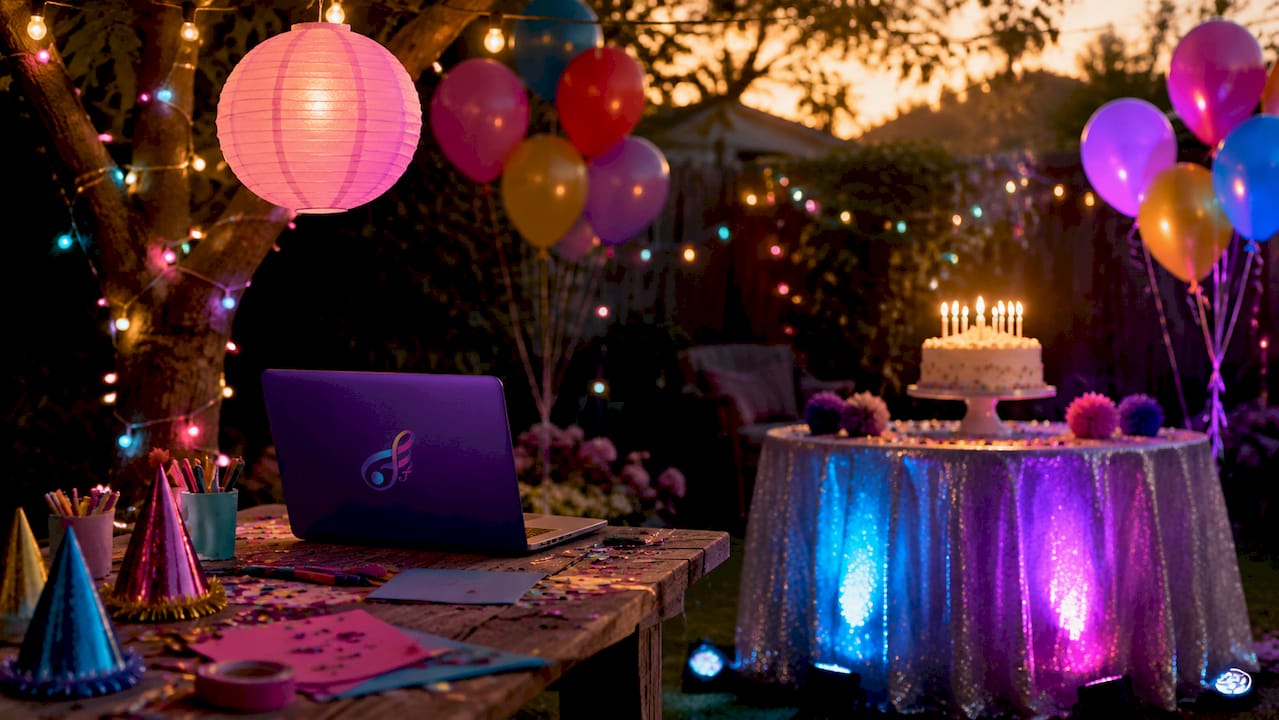
General event areas should be maintained at 300–500 lux for safety and visibility. Dimmers allow you to shift that level during toasts or dancing without changing any fixtures. That flexibility is what separates a well-planned party from one that feels static all night.
Event insiders use a 60/40 lighting ratio: 60% of lighting dedicated to social and activity zones, 40% for food and service areas. This ratio keeps energy concentrated where guests are most active. It also prevents the common mistake of over-lighting the buffet table while leaving the dance floor dim.
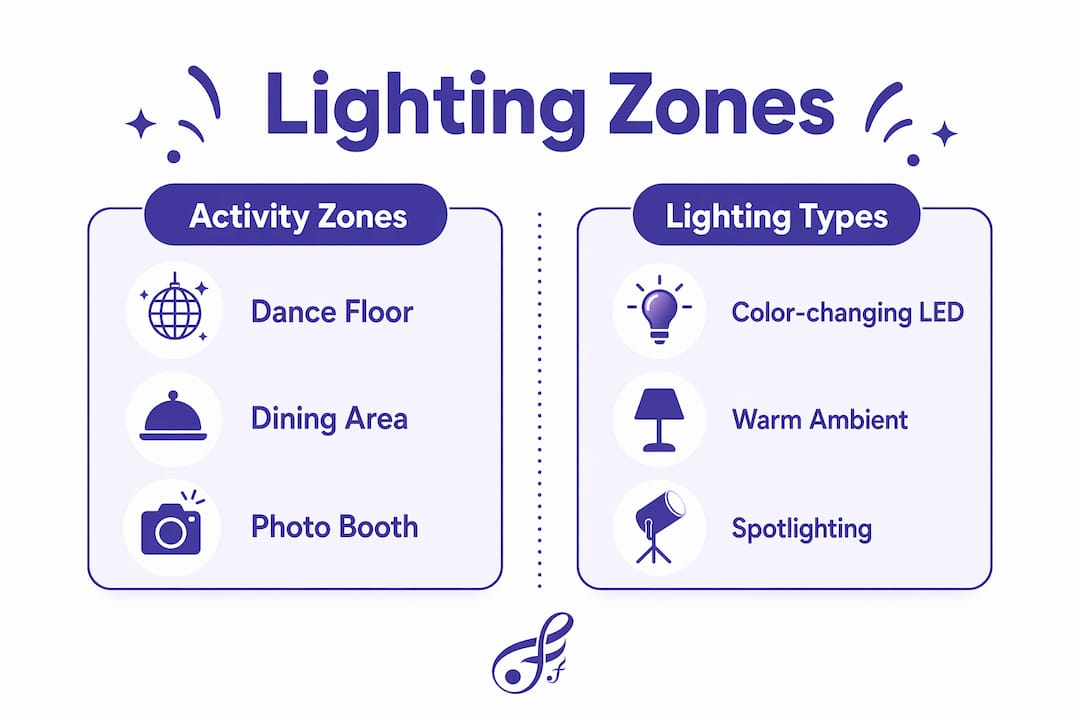
Lighting zones by activity
- Dance floor or activity zone: Use color-changing LEDs or a wash light at medium-high intensity. This zone gets the most lighting investment.
- Dining and seating area: Warm ambient light at lower intensity. Guests should feel relaxed, not interrogated.
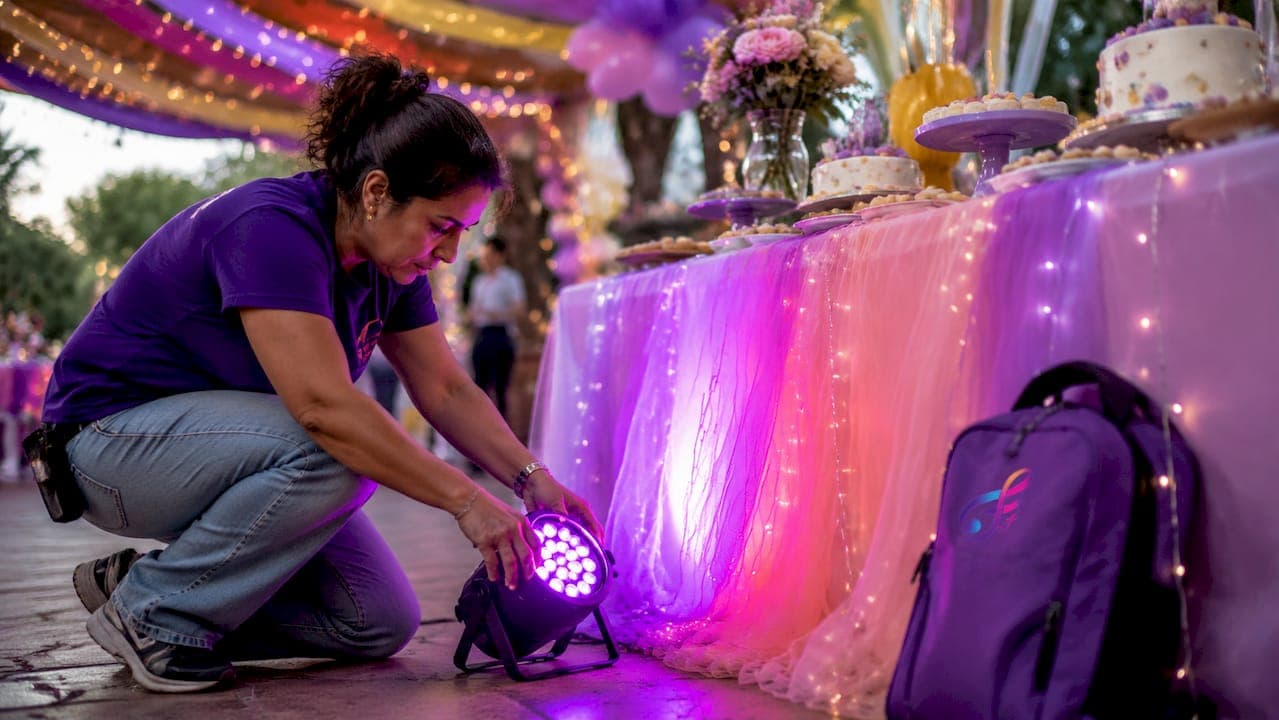
- Cake and dessert table: A single accent uplight or a fairy light backdrop creates a natural focal point.
- Gift and entry area: Moderate task lighting so guests can navigate safely without disrupting the party mood.
- Photo booth or backdrop: Bright, even lighting from the front. Avoid overhead-only sources here.
Pro Tip: If the venue is dark, lighting defines focal points and directs guest flow. Without clear focal points, energy scatters and guests feel uncertain about where to gather.
| Zone | Recommended lighting type | Intensity |
|---|---|---|
| Dance floor | Color-changing LED wash | High |
| Dining area | Warm ambient (2700–3000K) | Medium-low |
| Cake table | Accent uplight or fairy light backdrop | Focused |
| Photo area | Front-facing even light | Bright and even |
| Entry and gift area | Task lighting | Moderate |
What creative and budget-friendly lighting ideas can parents and planners use?
Creative lighting does not require a big budget. The most effective birthday party lighting ideas combine a few well-placed elements rather than filling a room with random decorations.
A fairy light curtain at least 6 feet wide behind a dessert table significantly improves photo quality and atmosphere. Setup takes under 30 minutes, and the result looks professionally designed. Pair it with a simple tablecloth in a matching color and the cake table becomes the visual anchor of the entire party.
Festoon bulbs strung overhead work beautifully for outdoor birthday parties. They add warmth and a sense of occasion without requiring any special skills to install. Battery-powered uplights placed at the base of walls or behind furniture add depth to any indoor space. LED balloon centerpieces serve double duty as decoration and ambient light sources.
- Fairy light curtains: hang behind the cake or dessert table for an instant photo backdrop
- Festoon bulbs: string overhead outdoors for warm, ambient coverage
- Battery-powered uplights: place at wall bases or behind furniture for depth and color
- LED balloon centerpieces: combine decoration and soft ambient light at table level
- Candle lanterns: use on dining tables for warm, intimate accent lighting
Pro Tip: For photos, avoid overhead lighting alone. A side light or ring light at 45 degrees eliminates harsh shadows. Position the cake table near a window during late afternoon (4–6 PM) for natural warm light that flatters everyone in the frame.
Buying vs. renting lighting equipment
Purchasing a layered lighting kit costs around $90 and outperforms rental options priced at $150–$300 for most apartment or home birthday parties. Ownership means no return deadlines, no damage fees, and reuse across multiple events. Modern LED fixtures deliver high lumen output in compact, lightweight units, making professional-quality ambient and accent lighting achievable without renting commercial gear.
| Option | Typical cost | Best for |
|---|---|---|
| DIY lighting kit | ~$90 | Recurring home parties |
| Commercial rental | $150–$300 | One-time large venue events |
| Venue-provided lighting | Included | Basic coverage only |
For parents planning multiple parties over several years, buying a basic kit pays for itself after the first use. Rental makes sense only for large venues where scale requires professional-grade equipment. You can find more ideas in this guide to indoor party lighting that covers setup tips for a range of venue sizes.
How do you adapt lighting for different age groups and themes?
Age group determines the right color temperature and intensity more than any other factor. Children's parties need bright, cheerful light that feels safe and stimulating. Teen parties call for dynamic color and higher energy. Adult milestone birthdays benefit from warm, flattering tones that encourage relaxation.
Mixing color temperatures in one space creates unflattering skin tones and a disjointed look. Stick to one temperature range per zone. If you use warm white for dining and cool color for the dance floor, keep those zones physically separated so the two temperatures do not bleed into each other.
- Children (ages 4–12): bright warm white (2700–3000K), consistent and safe; avoid strobe effects
- Teens (ages 13–17): color-changing LEDs, higher intensity, dynamic effects for dancing
- Adults (ages 18+): warm white (2700K), dimmers for mood shifts, candle accents for intimacy
- Mixed-age parties: neutral 3000–3500K as a base, with color accents limited to the dance zone
Themed parties get their character from accent lighting more than any other element. A tropical theme comes alive with green and amber uplights on palm decorations. A galaxy theme uses deep blue and purple washes. A vintage party pairs beautifully with Edison bulb strings and candle lanterns. The theme dictates the color palette, and the lighting reinforces it. Lighting and music work together to build that full sensory experience, and you can read more about how they complement each other in this overview of music at birthday parties.
Professional lighting draws attention to focal points like the cake or dance floor rather than just illuminating the space. Venue-provided lighting handles basic visibility. Intentional lighting design handles everything else.
Key Takeaways
Effective birthday party lighting combines layered ambient, task, and accent sources at the right color temperature for the age group and theme.
| Point | Details |
|---|---|
| Color temperature matters | Use 2700K for cozy adult parties, 3000–3500K for mixed ages, and 4000K for teen events. |
| Layer three lighting types | Combine ambient, task, and accent lighting to cover all party zones effectively. |
| Apply the 60/40 ratio | Dedicate 60% of lighting to activity zones and 40% to food and service areas. |
| Buy over rent for home parties | A $90 DIY kit outperforms $150–$300 rentals for recurring apartment or home celebrations. |
| Avoid mixed temperatures | Stick to one color temperature range per zone to keep skin tones flattering and the look cohesive. |
What I have learned from planning hundreds of lit-up birthday parties
After working events across Northern Utah for years, the single biggest mistake I see parents and planners make is treating lighting as an afterthought. They spend hours on decorations, food, and music, then plug in whatever bulbs came with the venue and wonder why the photos look flat and the energy feels off.
The second mistake is mixing color temperatures without realizing it. A string of warm fairy lights next to a cool white overhead fixture creates a muddy, unflattering look in photos and in person. Pick one temperature range and commit to it for each zone.
What actually works is planning your lighting in three passes. First, walk the venue and identify your three focal points: the cake table, the dance or activity area, and the entry. Second, assign a light source to each focal point before you think about fill lighting. Third, add ambient fill last, at a lower intensity than your focal points. That sequence prevents the most common problem, which is a bright, even wash that makes every corner of the room look equally unimportant.
The investment in a basic LED kit pays off faster than most people expect. I have seen a $90 kit with a few uplights, a fairy light curtain, and a color wash completely transform a living room into a party space that guests genuinely remember. That is not about spending more money. It is about placing light with intention.
— Drew Deenie
Fiesta Fusion can handle the lighting so you can enjoy the party
Planning the right lighting setup takes time, and the execution matters as much as the plan. Fiesta Fusion is a veteran-owned event company serving Ogden and Northern Utah, and lighting is one of the core services the team brings to birthday parties across Weber County, Davis County, and Salt Lake City.
From uplighting that sets the color tone of your venue to photo booth rentals that give guests a perfectly lit keepsake, Fiesta Fusion handles the technical side so you can focus on the celebration. The team also offers party enhancements that pair lighting with entertainment for a complete event experience. Visit Fiesta Fusion to see packages and check availability for your next birthday event.
FAQ
What is the role of lighting at birthday parties?
Lighting sets the mood, directs guest attention to focal points, and shapes the overall atmosphere of a birthday party. It functions as both a functional and decorative tool that influences how guests feel and interact throughout the event.
What color temperature is best for a birthday party?
Use 2700K for cozy adult parties, 3000–3500K for mixed-age gatherings, and 4000K for high-energy teen events. Mixing color temperatures in one space creates unflattering skin tones and a disjointed look.
How bright should birthday party lighting be?
General event areas should be maintained at 300–500 lux for safety and visibility. Use dimmers to lower intensity during toasts or dancing without changing any fixtures.
Is it better to buy or rent party lighting?
Buying a layered lighting kit at around $90 outperforms rental costs of $150–$300 for most home or apartment birthday parties. Rental makes more sense for large venues that require professional-grade equipment at scale.
How do I make photos look better at a birthday party?
Position the cake table near a window between 4–6 PM for natural warm light. Use a side light or ring light at 45 degrees to eliminate harsh shadows, and avoid relying on overhead lighting alone for photo areas.