TL;DR:
- A well-planned event timeline keeps children's birthday parties organized and stress-free.
- It controls activity flow, prevents chaos, and ensures kids stay engaged while parents enjoy the celebration.
A well-built event timeline birthday party is the single most effective tool for keeping kids happy, parents calm, and the celebration on track. Without a clear schedule, even the most thoughtfully planned party can unravel fast. Children thrive on structure, and a consistent, predictable schedule reduces chaos and gives kids a sense of security throughout the day. The good news is that building a solid birthday party schedule does not require a spreadsheet or a professional planner. It requires the right framework, the right timing, and a little flexibility.
What is an event timeline birthday party and why does it matter?
An event timeline birthday party is a structured, hour-by-hour plan that maps out every phase of the celebration, from guest arrivals through cake and departure. Event planners call this a "run of show" or "party itinerary," and the same principle applies whether you are hosting ten toddlers or twenty middle schoolers.
The core benefit is control without rigidity. A clear birthday celebration itinerary tells you when to start games, when to serve food, and when to cut the cake. That clarity prevents the two most common party disasters: dead time where kids get bored and restless, and rushed endings where no one has said goodbye properly.
Parents who plan a birthday timeline in advance also report less stress on the day itself. When you know the sequence, you spend less mental energy making decisions in the moment and more time actually enjoying the party with your child.
How long should a children's birthday party last?
Party length is the foundation of any birthday party schedule. Get it wrong, and no amount of great activities will save the day.
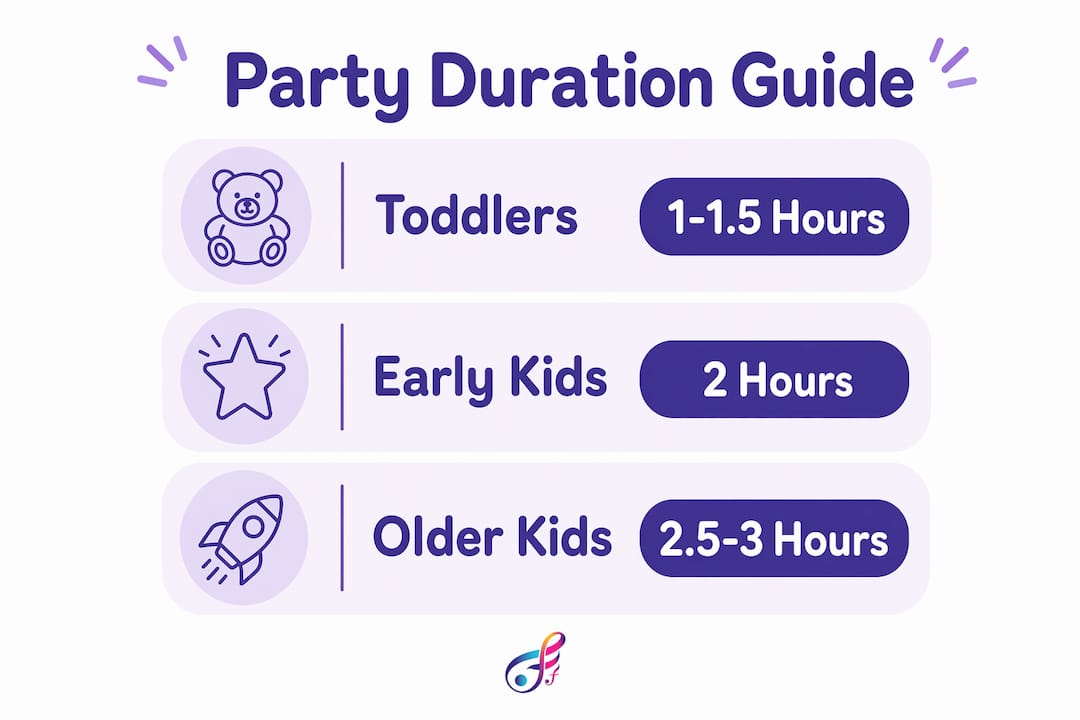
Recommended durations by age follow a clear pattern: toddlers ages 1–3 do best with 1 to 1.5 hours, children ages 4–7 thrive in a 2-hour window, and kids ages 8–12 can handle 2 to 3 hours when activities are varied. These are not arbitrary numbers. Young children hit overstimulation quickly, and a party that runs 30 minutes too long often ends in tears, meltdowns, or exhausted parents.
| Age group | Recommended duration | Key reason |
|---|---|---|
| Toddlers (ages 1–3) | 1 to 1.5 hours | Short attention spans; nap schedules |
| Young children (ages 4–7) | 2 hours | Enough time for games, food, and cake |
| Older kids (ages 8–12) | 2 to 3 hours | Can sustain engagement with varied activities |
Pro Tip: Set your end time 15 minutes earlier than you tell guests. That buffer absorbs late pickups and gives you breathing room for the final cleanup.
Pacing matters as much as total length. A 2-hour party with no clear structure feels longer and more chaotic than a 2-hour party with defined phases. Think of the timeline as a rhythm: high energy, then food, then a gentle wind-down. That rhythm keeps kids engaged without burning them out.
How to plan a birthday timeline weeks before the party
Good event planning for a birthday starts well before the day itself. The planning window breaks naturally into four stages.
-
Four to six weeks before: Book the venue, confirm the date, and lock in any entertainment. This is also when you choose your theme and start building your birthday party entertainment checklist. Venues and entertainers book up fast, especially on weekends in spring and fall.
-
Three to four weeks before: Send invitations. Invitations should go out 3–4 weeks ahead with an RSVP deadline set 7–10 days before the party. That deadline gives you enough time to finalize headcounts for food, party favors, and seating.
-
Two to three weeks before: Finalize your activity schedule and order supplies. Write out the full party day itinerary at this stage, not the day before. Knowing your activity sequence helps you identify gaps or transitions that need filling.
-
One week to the day before: Confirm all bookings, prep decorations, and create a printed copy of the timeline. Share it with any helpers or co-parents who will be running activities. A printed schedule on the kitchen counter is far more reliable than trying to remember everything in the moment.
Pro Tip: Assign each timeline block to a specific adult helper. One person handles games, one manages food, and one stays near the birthday child. Clear roles prevent the "who's doing what?" scramble mid-party.
On the morning of the party, do a single walkthrough of the space before guests arrive. Check that each zone is ready: the activity area, the food table, and the seating area. Designated physical zones for play, eating, and socializing let the party run itself and reduce the need for constant adult intervention. That setup work is what separates a stressful party from a smooth one.
How do you structure the party day activity sequence?
The sequence of activities is where most birthday party timeline ideas either succeed or fall apart. The proven structure follows a simple arc: arrivals and free play, high-energy games, food, cake, and wind-down.
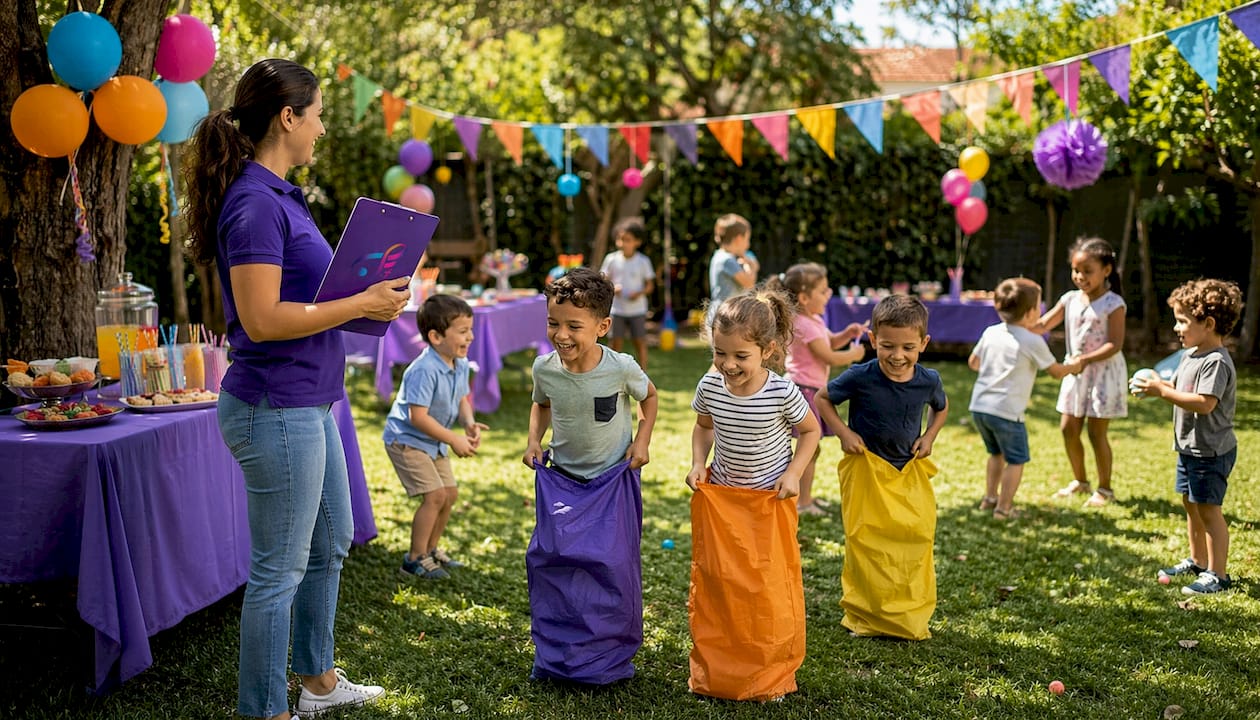
Effective party flow allocates roughly 20–45 minutes for arrivals and free play, 45–60 minutes for high-energy activities, 20–45 minutes for food, and 15–30 minutes for cake and wind-down. That structure is not accidental. It mirrors children's natural energy curve: excited on arrival, peaking during games, then naturally settling as food and cake signal the end.
Why high-energy activities come before food
Running games and physical activities before the meal is one of the most underrated decisions in birthday party planning. Kids are at their most energetic and cooperative before they eat. After a meal, energy drops and attention spans shorten. Reversing this order, serving food first and then trying to run games, leads to sluggish participation and frustrated parents.
Sequencing cake and gifts
Scheduling cake 20–30 minutes before the party ends serves a specific purpose. It acts as a natural, nonverbal signal that the celebration is winding down. Children and parents both read that cue without anyone having to announce "the party is almost over." Gifts, if opened at the party, work best immediately after cake when energy is still present but the group is already seated and calm.
Here is a sample birthday celebration itinerary for a 2-hour party starting at 2:00 PM:
- 2:00–2:20 PM: Guest arrivals, free play, and welcome activity (coloring, building blocks, or a craft station)
- 2:20–3:00 PM: Organized games and high-energy activities (relay races, freeze dance, or a themed game)
- 3:00–3:25 PM: Food service and seated meal
- 3:25–3:45 PM: Cake, singing, and candles
- 3:45–4:00 PM: Gift opening or party favors and goodbyes
For early pickups, have a discreet exit plan ready. Keep parent contact information accessible and designate a quiet spot near the exit where overwhelmed children can decompress without disrupting the group.
What are the most common birthday party timeline mistakes?
Even well-intentioned parents make the same planning errors. Knowing them in advance is the fastest way to avoid them.
- Running the party too long. A party that goes on too long leads to overstimulation, meltdowns, and parental exhaustion. Stick to the age-appropriate duration and resist the urge to add "just one more game."
- Building a schedule that is too rigid. A minute-by-minute script creates anxiety when things run over. Build in 5-minute buffers between blocks instead.
- Skipping the arrival phase. Free play at the start is not wasted time. It lets latecomers arrive without disrupting a structured activity and gives kids a chance to settle in.
- Ignoring transitions. Moving from games to food to cake without clear signals causes confusion. Use a simple verbal cue, a song, or a bell to mark each transition.
- Leaving the birthday child unattended during key moments. The emotional tone of the party is set within the first 60 seconds of arrival. A parent who is present, welcoming, and engaged at the door anchors the birthday child's experience positively for the entire event.
A simple, loose schedule beats a complex, rigid one every time. Children do not need a perfectly choreographed event. They need to feel safe, included, and excited. Build your timeline around those three feelings, and the details will fall into place.
What I have learned from watching hundreds of kids' parties
I have been at enough children's birthday parties to know that the ones parents remember fondly all share one trait: the adults were actually present. Not running around fixing problems, not glued to a checklist, but genuinely in the moment with the kids.
That only happens when the planning is done early and the timeline is simple enough to run without constant supervision. The parents who start planning 4–6 weeks out, assign helpers to specific roles, and build physical zones into their space are the ones who end up laughing at the cake table instead of sweating in the kitchen.
The arrival moment is one I always come back to. Being present and welcoming at the door sets the emotional tone for everything that follows. It costs nothing and takes 30 seconds, but it is the detail most parents skip because they are still setting up decorations. Finish the setup before guests arrive, even if it means starting earlier. That greeting moment is worth more than a perfectly arranged dessert table.
My honest advice: keep the schedule to four or five blocks, build in a buffer, and give yourself permission to let the party breathe. The kids will not remember whether the games started exactly on time. They will remember whether they had fun. A well-lit, well-organized party space and a parent who is smiling and present will do more for the celebration than any elaborate itinerary.
— Drew Deenie
How Fiesta Fusion fits into your birthday party plan
Planning a great birthday party schedule takes care and creativity. The entertainment you choose shapes the energy of every block in your timeline.

Fiesta Fusion is a veteran-owned entertainment company serving Ogden and Northern Utah, and their 360 photo booth rental fits naturally into the wind-down phase of any birthday celebration. Drop it in after cake and it gives kids and parents a shared, memorable activity that closes the party on a high note. Fiesta Fusion also handles uplighting and event enhancements that make the space feel special from the moment guests walk in. Booking early, ideally 4–6 weeks out, locks in your date and gives you one less thing to coordinate on party day. Learn more about integrating photo booth props and ideas into your celebration.
Key takeaways
A structured birthday party schedule built around age-appropriate timing, clear activity sequencing, and designated physical zones is the most reliable way to keep kids engaged and parents stress-free.
| Point | Details |
|---|---|
| Match duration to age | Toddlers need 1–1.5 hours; ages 4–7 need 2 hours; ages 8–12 can handle up to 3 hours. |
| Start planning 4–6 weeks out | Book venues and entertainers early, then send invitations 3–4 weeks before the party. |
| Sequence activities by energy | Run high-energy games before food so kids are at peak engagement when it matters most. |
| Use cake as a closing signal | Scheduling cake 20–30 minutes before the end gently signals wind-down to kids and parents. |
| Keep the schedule simple | Four to five blocks with built-in buffers outperform rigid, minute-by-minute scripts every time. |
FAQ
How long should a kids' birthday party last?
Party length depends on age. Toddlers do best with 1 to 1.5 hours, children ages 4–7 thrive in a 2-hour window, and kids ages 8–12 can sustain 2 to 3 hours with varied activities.
When should I send birthday party invitations?
Send invitations 3–4 weeks before the party and set an RSVP deadline 7–10 days before the event. That window gives you enough time to finalize headcounts for food and party favors.
What is the best order of activities at a birthday party?
Start with free play during arrivals, move into high-energy games, then serve food, cut the cake, and close with gifts or party favors. This sequence follows children's natural energy curve and prevents post-meal sluggishness during games.
When should cake be served at a birthday party?
Serve cake 20–30 minutes before the party ends. That timing acts as a natural, nonverbal cue that the celebration is winding down, which reduces lingering and makes departures smoother.
How do I handle a child who needs to leave early?
Prepare a discreet exit plan before the party starts. Keep parent contact information accessible and designate a quiet area near the exit where overwhelmed children can step away without disrupting the group.