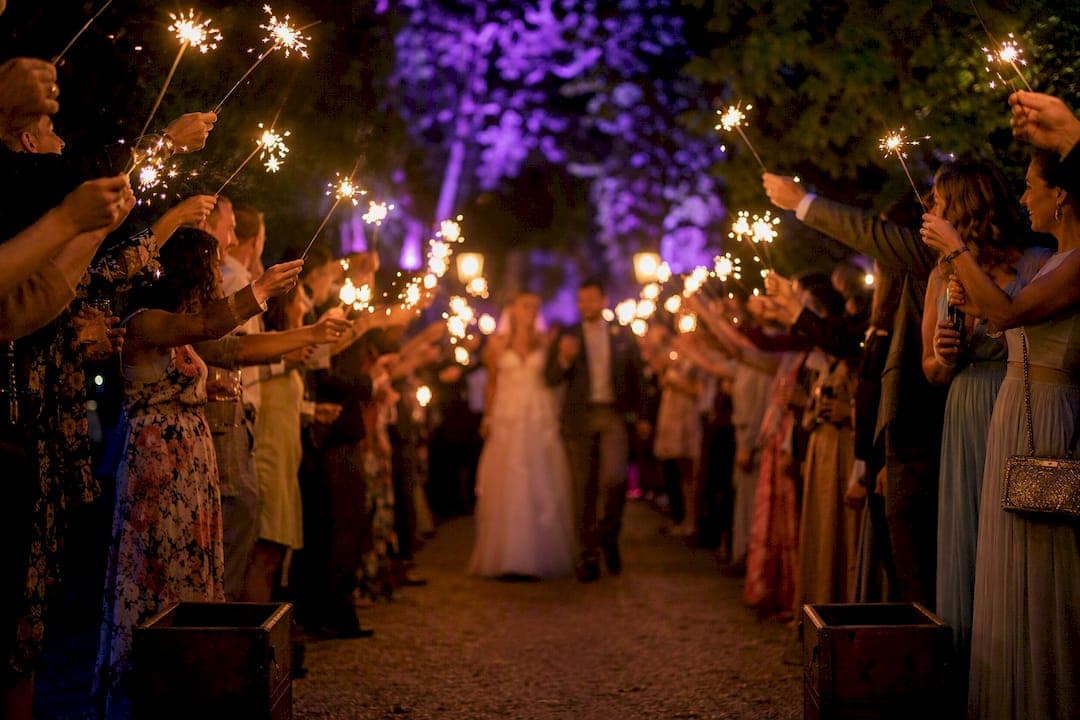
A sparkler send-off is a wedding exit tradition where guests line up in two rows holding lit sparklers, creating a glowing tunnel the newlyweds walk through as they leave the reception. It usually happens at the very end of the night or gets staged 30 to 45 minutes early to catch guests before they head out. It's worth doing if your venue allows open flames and you want dramatic, low-light photos. Skip it if your venue bans fire or the timeline is already tight. Before you buy a single sparkler, get written venue approval and plan a metal bucket for hot-wire disposal.
Key Takeaways
A sparkler send-off works when venue approval, sparkler length, and photographer timing are all locked in before the reception even starts.
| Point | Details |
|---|---|
| Confirm venue approval in writing | Ask about permitted length, buffer zones, and any cleanup fees before you buy sparklers. |
| Choose 20-inch or 36-inch sparklers | Shorter 10-inch sparklers burn out too fast for a full walk and good photos. |
| Buy 15 to 20 percent extra | Covers duds and gives your photographer room for a second pass. |
| Assign lighters and a cleanup crew | One lighter per six to eight guests, plus someone to sweep for wires immediately after. |
| Coordinate with your DJ or vendor | Fiesta Fusion times announcements and lighting cues so the moment runs smoothly. |
Table of Contents
- What Happens During a Sparkler Send-Off
- Is a Sparkler Send-Off Worth It?
- Safety Checklist and Venue Questions to Confirm in Writing
- Sparkler Sizes, Types, and How Many to Buy
- How to Run a Smooth, Safe Sparkler Send-Off
- Getting Great Photos During the Send-Off
- Alternatives if Sparklers Are Banned
- Vendor Checklist: Who Owns What
- Guest Instructions and Etiquette
- Cleanup Beyond Disposal
- What Event Pros Actually See Go Wrong
- How Fiesta Fusion Helps Your Send-Off Go Right
- Sources
- FAQ
What Happens During a Sparkler Send-Off
The event follows a predictable rhythm, even though it looks spontaneous in photos. Here's the typical flow:
- The DJ or coordinator announces the send-off, usually twice, once around 15 minutes out and again at the 5-minute mark.
- Guests grab sparklers and form two facing lines, creating a walkway.
- Designated lighters ignite the sparklers in sequence, starting from the far end.
- The couple walks (or dances) through the tunnel while the photographer captures the moment.
- Coordinators collect spent wires and douse them immediately.
Some couples run this as their actual exit. Others stage a "fake" send-off earlier in the evening, since it preserves guest turnout and takes advantage of darker skies before people start drifting home.
Is a Sparkler Send-Off Worth It?
Benefits:
- Iconic, cinematic photos that many couples put at the top of their must-have shot list
- Guests get a hands-on role instead of just watching
- The lighting creates a mood no other send-off style quite matches
Drawbacks:
- Many venues restrict or flatly ban open flames, especially indoor and historic properties
- Fire risk goes up in dry conditions or high wind
- Someone has to manage cleanup, disposal, and coordination on a night already packed with logistics
The decision usually comes down to two factors: does your venue say yes in writing, and does your photographer have a plan for low-light shots? If both check out, a sparkler send-off is one of the more reliably photogenic exits available. If either one is shaky, it's not worth forcing.
Safety Checklist and Venue Questions to Confirm in Writing
Get these answers from your venue before you order anything:
- Are sparklers permitted at all, and is that approval in writing?
- Is there a maximum sparkler length allowed?
- Do you need a buffer zone between guests and any structures, dry grass, or parking areas?
- Is there a cleanup fee or damage deposit tied to fire-related activities?
Sparklers burn at roughly 1,800 to 3,000 degrees Fahrenheit, so a few ground rules matter regardless of venue: never let children light or hold them unsupervised, and if alcohol has been flowing, make a clear "drinks down" announcement before lighting begins. Check the weather too. High wind spreads sparks unpredictably, and dry-season fire restrictions can override even a venue's normal policy. Because venue restrictions are the single biggest constraint on whether this tradition happens at all, have a backup plan ready.
For disposal, use metal buckets filled with sand or water, not plastic bins, and place them at both ends of the tunnel.
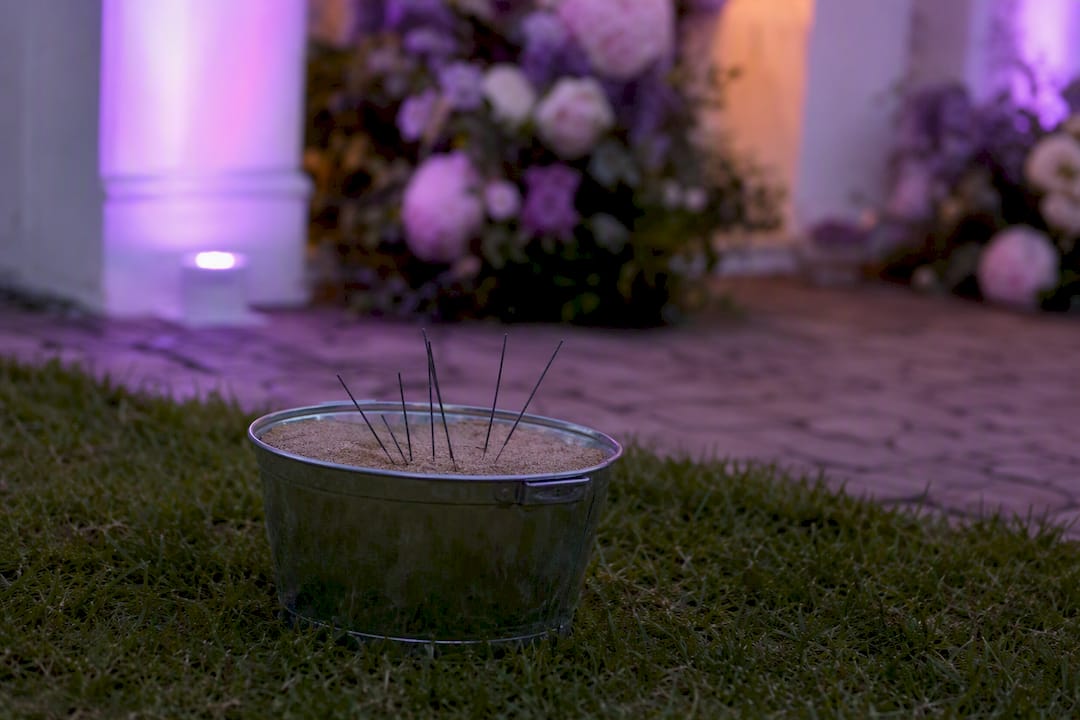
Pro Tip: Ask your venue coordinator specifically about fire code rules, not just general policy. Many venues that "allow" sparklers still cap the length or require a designated fire-safe zone you won't know about unless you ask directly.
Sparkler Sizes, Types, and How Many to Buy
Size determines both burn time and how your photos look. Shorter sparklers burn out fast and rush the moment. Longer ones give the photographer breathing room and the couple a slower, more deliberate walk.
| Sparkler Length | Approximate Burn Time | Best For |
|---|---|---|
| 10 inch | 30 to 60 seconds | Small, budget-conscious gatherings only |
| 20 inch | 90 seconds to 2 minutes | Most weddings, moderate guest counts |
| 36 inch | about 60 to 90 seconds | Larger guest counts, longer walks, extra photo time |
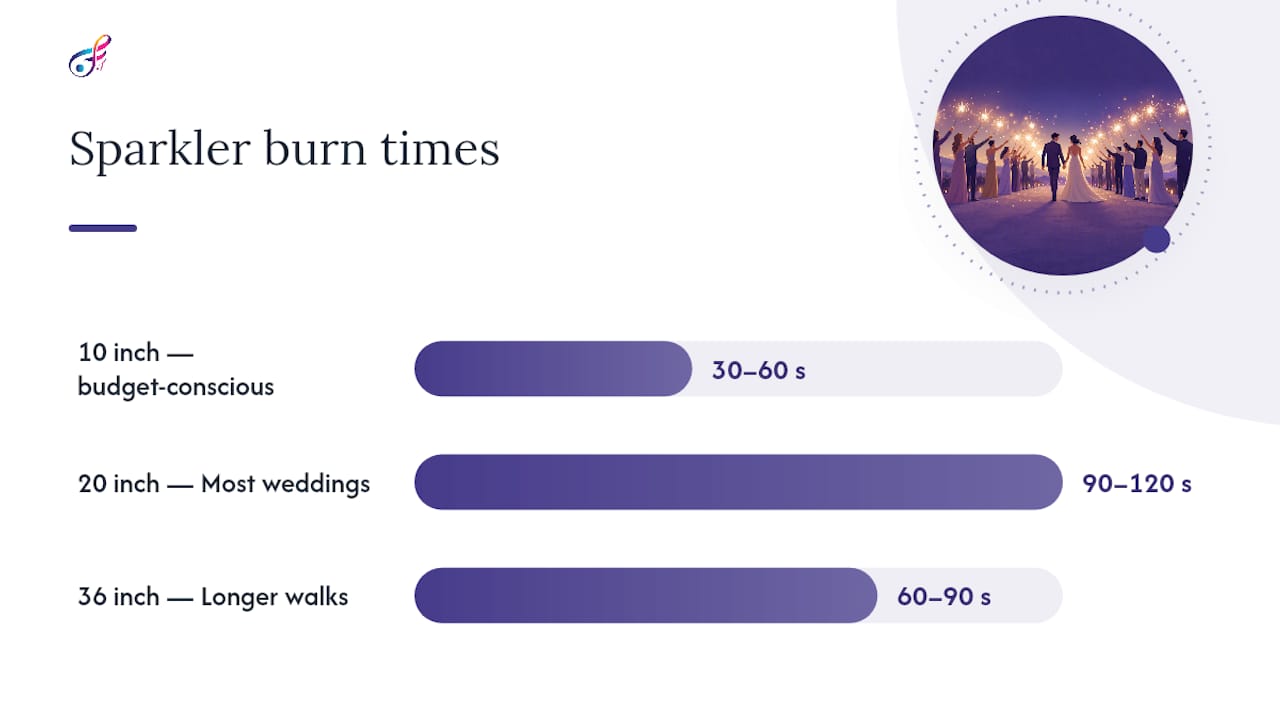
Industry guides consistently recommend 20-inch or 36-inch sparklers over the shorter 10-inch option, since photographers need enough burn time to get the shot before anyone's sparkler dies out.
For quantity, plan on one sparkler per guest participating, then add 15 to 20 percent extra to cover duds and a possible second photo pass. A few buying tips worth following:
- Choose steel-core or smokeless sparklers for cleaner photos with less smoke haze.
- Gold-tone sparklers produce a warmer light that photographs better than white or colored varieties.
- Buy from a reputable fireworks retailer rather than a discount multipack with unclear specs.
How to Run a Smooth, Safe Sparkler Send-Off
A great sparkler exit is built on logistics, not luck. The difference between a chaotic tunnel and a magazine-worthy shot almost always comes down to planning the sequence in advance. Here's a run sheet that works:
Before the event:
- Get venue approval in writing.
- Buy your sparklers with the 15 to 20 percent buffer built in.
- Designate two or three sober coordinators to manage distribution and disposal.
- Assign one lighter per several guests using long-reach torch lighters.
- Confirm your photographer's call time and positioning with the DJ or coordinator.
During the send-off: 6. The DJ announces the send-off at the 15-minute and 5-minute marks. 7. Lighters ignite sparklers starting from the far end of the tunnel and working inward, so the whole line is lit by the time the couple starts walking. 8. Coordinators hold the couple back until the photographer signals they're ready. 9. The couple walks through at a slow, deliberate pace, since a rushed walk tends to blur the shot.
After the walk: 10. Coordinators immediately collect every spent wire while it's still visible and easy to spot. 11. Wires go straight into sand or water buckets, never left on the ground or tossed in regular trash. 12. A designated cleanup crew does a final sweep of the tunnel area before guests disperse.
Pro Tip: Budget your timeline realistically. Gathering guests takes several minutes on its own, lighting takes a few more, and the walk itself is only about 60 to 90 seconds. Most of your planning time goes into the setup, not the moment itself.
Getting Great Photos During the Send-Off
Photographers who shoot sparkler exits regularly agree on a few non-negotiables. Skip on-camera flash entirely. It flattens the sparkler trails and kills the glow that makes these photos work in the first place. Instead, photographers position themselves at the far end of the tunnel shooting straight toward the couple, with a second shooter stationed midway to grab candid side angles.
A few more things that make a real difference:
- Keep the background as dark as possible for contrast; string lights or bright signage behind the couple will wash out the sparkler glow.
- Set a slower shutter speed ahead of time to capture light trails instead of freezing them.
- Run two passes if time allows: one wide shot of the full tunnel, then a second closer pass for the kiss or embrace at the end.
Long sparklers make this whole process easier. Photographers consistently note that short sparklers force a rushed walk, and a rushed walk usually means a half-lit or blurry tunnel.
Alternatives if Sparklers Are Banned
If your venue says no to open flames, you still have solid options like consulting the role of event electricians at weddings to explore safe power and lighting logistics. LED wands and glow sticks give a similar tunnel effect without any fire risk, and they photograph well in low light too. Ribbon wands, confetti, and biodegradable flower petals work for a softer, more romantic exit style.
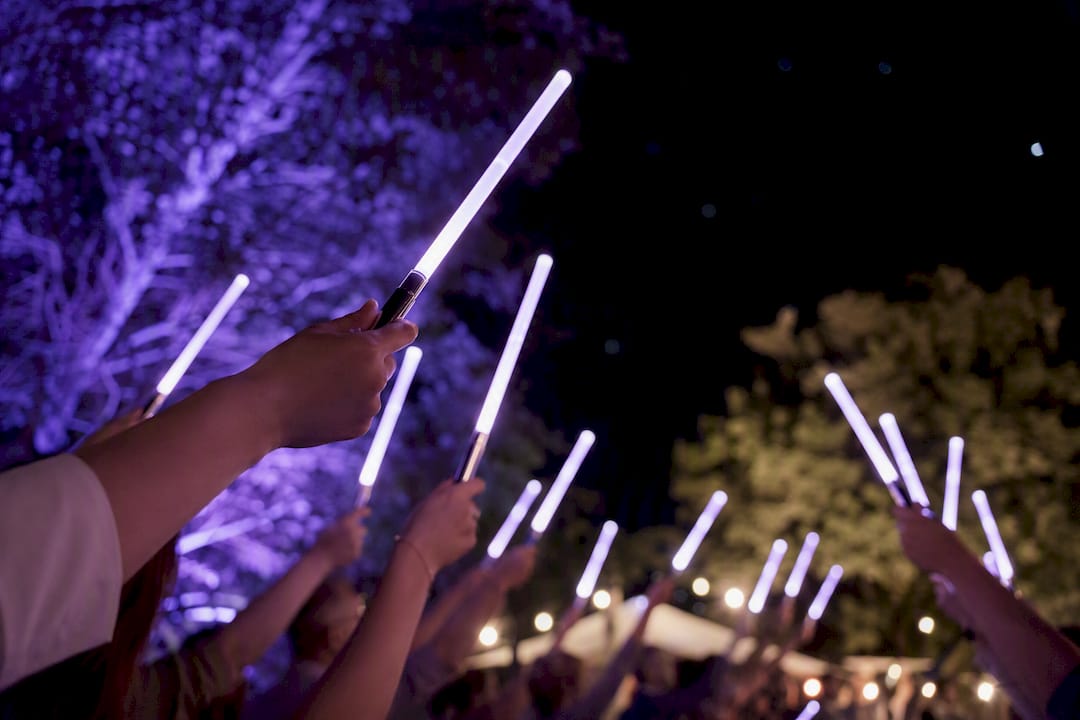
Cold-spark fountains reproduce something close to the sparkler visual, complete with dramatic bursts of light, but they require professional vendor equipment and separate venue approval. They're worth considering for indoor venues or dry-season restrictions where fire simply isn't an option, or when kids and elderly guests will be standing close to the exit line. Our guide to types of wedding entertainment options covers more send-off styles if you're still deciding.
Vendor Checklist: Who Owns What
A sparkler send-off runs smoothly when responsibilities are split clearly instead of left to chance. The coordinator owns the overall timing and keeps everyone on schedule. The DJ handles the announcements and reads the room for the right moment. Designated lighters manage the actual ignition sequence, and the photographer times the walk itself.
On the equipment side, have long-reach torch lighters, sand-filled metal buckets, extra sparklers beyond your main count, and simple signage or rope to keep the tunnel path clear. A one-page checklist handed to your coordinator, DJ, and venue contact ahead of time prevents most of the confusion that turns a great idea into a scramble.
Pro Tip: Print the checklist and give a copy to your DJ, photographer, and venue coordinator separately. When three people have the same plan in hand, nobody's guessing who lights the first sparkler.
Guest Instructions and Etiquette
Your guests want this to go well too, but most of them have never held a lit sparkler at a formal event, so a little guidance goes a long way. Have your coordinator or a few wedding party members give a quick verbal rundown right before lighting begins, not buried in a program nobody reads.
The basics are simple: hold the sparkler at arm's length, away from your body and clothing, and never let it point toward another guest. Once it's lit, guests should stay in their line and hold their position rather than wandering, since a moving crowd with lit sparklers is how accidents happen. Remind guests not to light their own sparkler from a neighbor's, since that leads to bunching, delays, and uneven timing down the line. Only the designated lighters should handle ignition.
Ask guests to keep sparklers upright and away from hair, veils, and loose fabric. This matters more than people expect, especially with flowing wedding attire nearby. If children are participating, a parent should hold the sparkler alongside them rather than handing over full control.
Once the couple has passed through, guests should hold their sparkler until it burns out naturally rather than waving it around or trying to extinguish it early, then drop it directly into the sand or water bucket a coordinator is holding out. A calm, unhurried etiquette briefing takes less than a minute and prevents almost every common mishap that shows up in wedding-day recaps.
Cleanup Beyond Disposal
Disposal handles the immediate fire hazard, but cleanup is a separate job that couples often forget to plan for. Spent sparkler wires cool slowly and stay sharp, so a full sweep of the ground is necessary even after every guest has dropped their wire in a bucket. Stray wires left in grass or on a dance floor are a liability, and more than one venue has charged a cleanup fee for wires found the next morning.
Sparkler residue can also leave faint ash marks or light staining on light-colored stone, wood decking, or outdoor rugs, especially if sparklers were held too close to a surface during lighting. A quick walk-through with a broom or leaf blower right after the send-off, while the area is still lit and visible, catches almost everything. Waiting until the next day makes stains harder to spot and wires easier to miss in the dark.
Assign this task to specific wedding party members ahead of time, the same way you'd assign someone to collect gifts or cards. It's a five-minute job if someone owns it, and a frustrating morning-after scramble if nobody does.
What Event Pros Actually See Go Wrong
The failures we hear about almost never come from the sparklers themselves. They come from nobody being assigned to light them in order, or the photographer not being ready when the couple starts walking. One wedding I heard about had gorgeous sparklers and a photographer stuck fumbling with settings mid-walk. A five-minute briefing with your DJ and photographer beforehand fixes nearly every version of this problem.
How Fiesta Fusion Helps Your Send-Off Go Right
Fiesta Fusion coordinates the parts of a sparkler send-off that go wrong most often: timing the DJ announcements, syncing with your photographer's call time, and having a lighting backup ready if your venue says no to open flames. As a veteran-owned DJ and photo booth company serving Ogden and Northern Utah, we handle the announcements and cues so your coordinator isn't juggling a stopwatch on top of everything else.

If sparklers aren't allowed at your venue, our uplighting and monogram projection options create a similarly dramatic exit moment without the fire code headache, and our 360 photo booth captures the celebration from angles a standard camera can't. Reach out to check availability for your date and talk through your send-off plan, sparkler or otherwise.
Sources
- Wedding Sparkler Exit Guide: Safety, Timing, and Logistics | Plan A Wedding
- Sparklers for Wedding Send-Off: How to Plan the Perfect Moment (2026) | Pix Wedding
- Masonjesmerphotography
- Wedding Sparklers: The Complete Send-Off Guide · Hypemakerz
FAQ
Is a Sparkler Send-Off Worth It?
Yes, if your venue permits open flames and your photographer has a low-light plan. It's one of the more reliably photogenic wedding exits when the logistics are handled ahead of time.
How Long Should Sparklers Be for a Wedding Send-Off?
Most planners and photographers recommend 20-inch or 36-inch sparklers, since 10-inch sparklers burn out in under a minute and don't leave enough time for a slow walk or good photos.
What to Do Instead of a Sparkler Send-Off?
LED wands, glow sticks, ribbon wands, and biodegradable petals all work as flameless alternatives, and cold-spark fountains can recreate a similar visual effect with vendor equipment and venue approval.
Are Sparklers Safe for a Wedding Send-Off?
They're safe when handled correctly: designated sober coordinators manage lighting and disposal, children never light their own, and spent wires go straight into sand or water buckets since they stay hot for several minutes after burning out.
When Should You Schedule a Sparkler Send-Off?
Most couples run it after dark for the best photo contrast, either as the actual end-of-night exit or as a staged version 30 to 45 minutes earlier to keep more guests around for it.