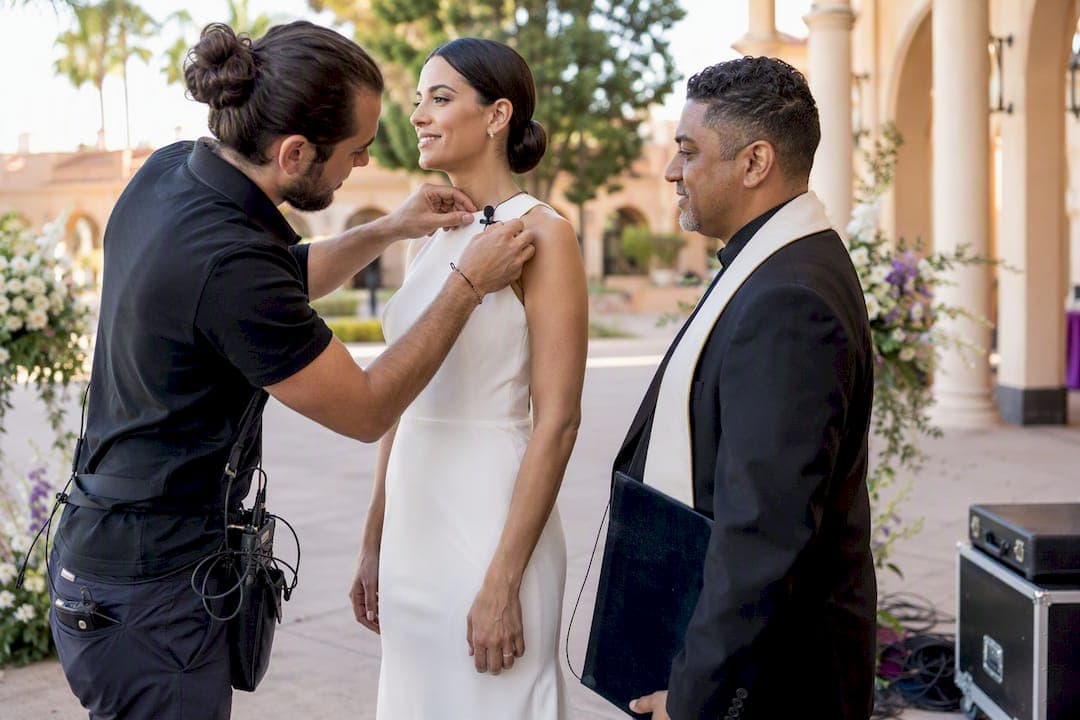
Yes, most ceremonies need a microphone, and skipping one is the most common regret couples report after the fact. The exceptions are narrow: fewer than 20 guests, a quiet indoor room, and no outdoor wind to fight.
Here's what pushes the answer from "maybe" to "definitely":
- More than 20 to 30 guests, since natural voice projection stops reaching the back rows at that point
- Any outdoor setting, where wind and open air swallow sound fast
- Hard or echo-heavy rooms (stone, glass, high ceilings)
- Soft-spoken officiants, nervous readers, or a soloist
- A videographer capturing vows for the highlight reel
If you're unsure, do a stand-and-talk test at your actual venue with your actual guest count in mind. If you can't hear a normal speaking voice from the back row without straining, you need amplification, not volume from a bigger voice.
Two next steps: test the room yourself, or hand it to a DJ or AV tech who does this every weekend.
Key Takeaways
Clear ceremony audio depends on matching microphone type to speaker role, following the 3-to-1 placement rule, and running a real sound check before guests arrive.
| Point | Details |
|---|---|
| Guest count sets the threshold | Ceremonies with more than 20 to 30 guests or held outdoors need amplification, not louder speaking. |
| Match mic type to role | Lavaliers suit officiants, handhelds suit readers, headsets suit celebrants who move. |
| Respect the 3-to-1 rule | Keep a second active mic at least three times farther from the source than the first to avoid phase cancellation. |
| Test before guests arrive | Run the sound check at rehearsal with someone listening from the back row. |
| Fiesta Fusion handles the details | Our crew plans mic roles, wireless channels, and backups as part of ceremony AV coordination in Northern Utah. |
Table of Contents
- When Do You Actually Need a Microphone Setup for a Wedding Ceremony?
- What Types of Microphones Work Best for a Ceremony?
- How Do You Set Up Microphones and Speakers for a Ceremony?
- How Do You Coordinate Microphones With Your DJ and Videographer?
- What Does a Ceremony Microphone Setup Typically Cost?
- What Should Be on Your Wedding Day Audio Checklist?
- Why Ceremony Audio Gets Overlooked Until It's Too Late
- How Fiesta Fusion Handles Ceremony Sound So You Don't Have To
- Sources
- FAQ
When Do You Actually Need a Microphone Setup for a Wedding Ceremony?
Guest count is the fastest filter. Fewer than twenty or thirty people in a small, carpeted, indoor room, most officiants can be heard without help. Cross that threshold, or move outside, and amplification stops being optional.
Distance matters more than most couples expect. Every extra foot between the speaker and the last row weakens what audio engineers call the direct-to-reverberant ratio, the balance between the voice you're aiming to hear and everything bouncing around the room or dissipating outdoors. Wind, traffic, and nearby crowds compound the problem outside.
Watch for these situations:
- An officiant with a naturally quiet voice or no public speaking experience
- Readers or grandparents who tend to speak fast or trail off
- A soloist or musician performing live during the processional or unity moment
- Any outdoor ceremony, regardless of guest count
A mic is genuinely optional only in a small, quiet, indoor space with a confident speaker and no video crew capturing audio. Verify by having someone whisper-test from the last row during setup.
What Types of Microphones Work Best for a Ceremony?
Different ceremony roles call for different hardware. Here's the practical rundown.
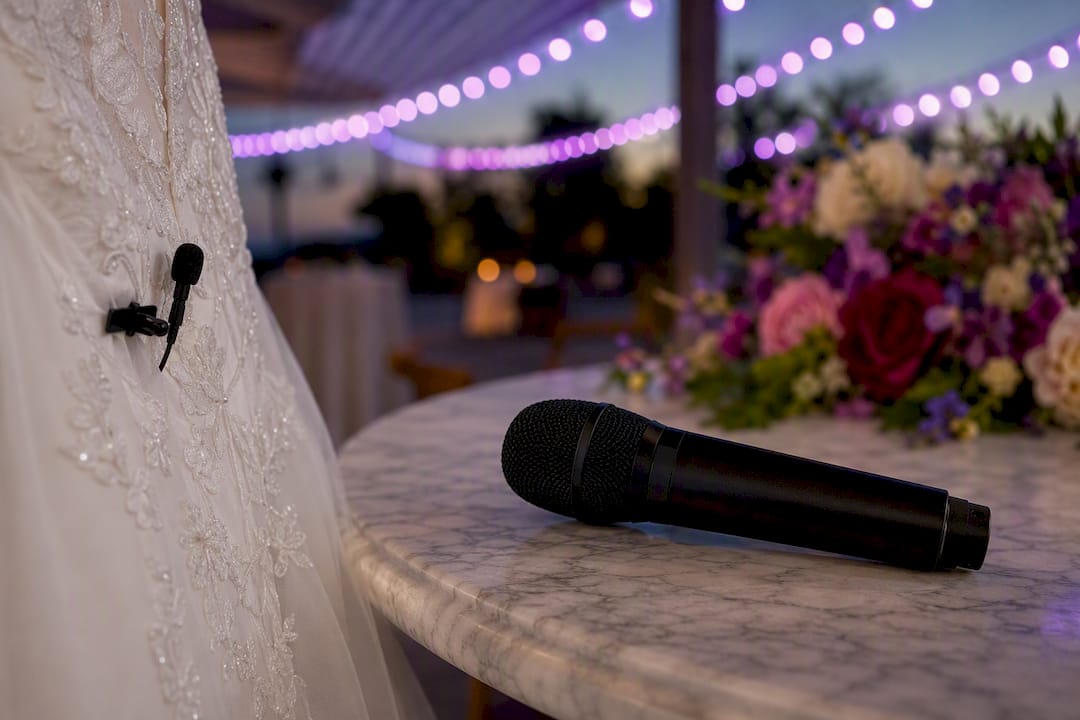
Lavalier (lapel) mics clip onto clothing and stay hands-free, making them the standard choice for officiants who need both hands for a program or rings. Handheld wireless mics work well for readings and toasts since one person holds it and passes it along. Headset mics track a moving mouth precisely, useful for celebrants who walk while speaking. Boundary mics sit flat on a podium or table and pick up a wide area, a decent fallback when wiring a person isn't practical. Shotgun mics on a stand aim tightly at one spot, good for a fixed vow location but poor for anyone who shifts around.
Role-based picks:
- Officiant: wireless lavalier, clipped near the collarbone
- Couple (vows): a second lavalier on the groom or a shared handheld passed between partners
- Readers: handheld wireless, since it changes hands easily between readings
- Soloists and musicians: instrument-specific mic or a vocal handheld, run through the same system
- Celebrants who move a lot: headset over lavalier for consistent pickup
Lavalier mics stay discreet for officiants, while handheld wireless units suit readings and vows better because they don't require careful clothing placement. Wireless systems give freedom of movement and cleaner photos, since no cable trails across the aisle. Wired mics are more reliable in dense radio-frequency environments (hotels, downtown venues) but limit where a speaker can stand.
Pro Tip: Ask your officiant to wear a shirt with a collar or lapel on ceremony day. Lavalier mics clip cleanly to structured fabric, and they slip or show wires on soft knits and strapless dresses.
How Do You Set Up Microphones and Speakers for a Ceremony?
Distance is the enemy of clear audio. Closer miking raises the ratio between voice and background noise, so speech should sit at least 6 decibels above ambient sound to be understood clearly. Practically, that means clipping the lavalier as near the mouth as clothing allows, not just somewhere on the chest.
When more than one mic is live at once, the 3-to-1 rule keeps voices from canceling each other out: if one mic sits a foot from a speaker, the next active mic needs to be at least three feet away. Two officiants sharing a podium, or an officiant and a reader standing close together, can trigger this problem without anyone noticing until playback sounds thin or phasey. When spacing that tightly isn't realistic, an automixer that mutes inactive channels solves the same issue by simply turning off mics nobody is using.
Speaker placement follows a rule most DJs skip: position speakers front-left and front-right near the couple, facing the guests, rather than blasting from a single unit at the back near the DJ table. Professional teams also mix from the audience's listening position, not from behind the speaker where the balance sounds different than it does to guests.
A few more basics that prevent embarrassing moments:
- Set gain levels during a real sound check, not a guess, and leave headroom before feedback starts
- Point mics away from speaker cones to avoid the classic screech
- Use foam windscreens or deadcats outdoors, since wind noise ruins lavalier audio fast
- Bring backup batteries and a backup handheld mic, charged and ready before guests arrive
How Do You Coordinate Microphones With Your DJ and Videographer?
Confusion over who owns the audio is where ceremonies go wrong. Before the wedding, ask every AV-adjacent vendor these questions directly:
- Who supplies the ceremony mics, and are they included or an add-on?
- Who mixes and monitors levels during the ceremony itself?
- What's the backup plan if a wireless mic drops out?
- How many wireless channels are you running, and have they been checked for interference?
Wireless frequency coordination matters more at hotel or downtown venues, where Wi-Fi networks and other events can clash with your system. A competent tech scans channels ahead of time rather than discovering the conflict live.
Videographers often want a direct audio feed rather than relying on a camera-mounted mic, which captures room echo instead of clean vows. Confirm this during vendor coordination, not the morning of.
Run the sound check during rehearsal or venue setup, with someone standing at the back row to confirm levels. That single step, more than anything else, is what eliminates most ceremony-day audio surprises. A walkthrough checklist built around vendor roles keeps these questions from slipping through the cracks.
Pro Tip: Give your officiant five minutes with the live mic before guests arrive. Most people have never worn a lavalier, and a quick practice run prevents the "can everyone hear me?" moment mid ceremony.
What Does a Ceremony Microphone Setup Typically Cost?
A basic ceremony mic setup, one or two wireless lavaliers plus a small speaker pair, typically runs on the lower end of a DJ's add-on pricing. A fuller package covering ceremony plus reception AV costs more, driven mainly by the number of wireless channels, the tech labor for setup and monitoring, and travel to the venue.
Ask vendors these questions before signing anything:
- Is there a scheduled sound check, or does the mic just get "turned on" at ceremony time?
- What's the backup if a mic or receiver fails?
- How many channels are included, and is channel interference something you've dealt with here before?
A vague answer to any of those is a real warning sign. Renting gear yourself makes sense for a tiny, quiet indoor gathering. For outdoor ceremonies, larger guest counts, or anything with live music, hiring a pro who handles backups and channel planning routinely is worth the cost.
What Should Be on Your Wedding Day Audio Checklist?
Run the sound check during rehearsal, with one person stationed at the back row to confirm every mic is audible, not just present.
Pack these items regardless of who's running audio:
- Charged spare batteries for every wireless unit
- A backup handheld mic, tested and ready
- Foam windscreens for any outdoor mic
- Extra XLR or lavalier cables
- A backup power source (extension cords, a portable battery pack) if outlets are unreliable
Quick fixes during the ceremony:
- Feedback squeal: mute the offending channel immediately and step the mic away from the speaker
- Wireless dropout: switch to the backup handheld without pausing the ceremony
- Dead battery mid-ceremony: swap in the spare unit during a natural pause (ring exchange, kiss)
Assign ownership before the day starts. One person, ideally your DJ or AV tech, owns the checklist. The couple shouldn't be troubleshooting audio in their ceremony attire.
Pro Tip: Label every cable and battery pack with tape and a marker. On a rushed wedding morning, nobody wants to guess which pack belongs to which lavalier.
Why Ceremony Audio Gets Overlooked Until It's Too Late
The biggest mistake isn't picking the wrong microphone. It's treating ceremony audio as an afterthought squeezed into five minutes before guests sit down. A rushed setup means no real sound check, no back-row verification, and no plan for what happens when a battery dies mid vow. The fix is almost embarrassingly simple: treat the ceremony sound check with the same seriousness as the reception's first dance cue, because vows only happen once and there's no redo.
How Fiesta Fusion Handles Ceremony Sound So You Don't Have To
Fiesta Fusion is the difference between hoping your officiant's mic works and knowing it will, because our veteran-owned crew treats ceremony audio as its own job, not an afterthought squeezed in before the reception. We handle mic selection by role, wireless channel planning, and a real sound check at your rehearsal or site setup, with backups on hand for every wireless unit and battery pack.

Serving Weber County, Davis County, and Salt Lake City, we bundle ceremony AV with DJ services or add it as a standalone enhancement alongside options like uplighting and monogram projections. If you want vows heard clearly by every guest, not just the front row, start a conversation with Fiesta Fusion about your ceremony date and guest count, and we'll map out the right setup before you sign anything.
Sources
- 3-1 rule of microphone placement - Sweetwater
- Microphone placement - acoustic concepts - Biamp Support
- Wedding Ceremony Audio: Professional vs. Convenient Setup - Rhythm System
- How to Choose the Right Microphone Setup for Your Wedding Ceremony - The Cause Light and Sound
- Do I Need a Microphone for My Wedding Ceremony? - Simon Laurence Music
FAQ
What Is the Best Way to Set Up a Microphone for a Wedding Ceremony?
Mic the officiant and at least one member of the couple with wireless lavaliers, place speakers front-left and front-right near the couple, and run a full sound check during rehearsal with someone listening from the back row.
What Is the 3-to-1 Rule for Microphones?
The rule states that when two microphones are active near each other, the second mic should sit at least three times farther from the sound source than the first, which reduces comb filtering and phase cancellation.
Do I Really Need a Microphone if My Ceremony Is Small?
Probably not if you have fewer than 20 to 30 guests in a quiet indoor room with a confident speaker, but outdoor ceremonies almost always need amplification regardless of guest count.
What Should I Ask a DJ or AV Vendor About Ceremony Audio?
Ask who supplies and mixes the mics, what the backup plan is for a dropout or dead battery, and whether a sound check happens at rehearsal or right before guests arrive. Fiesta Fusion answers all three as part of ceremony AV coordination for weddings across Northern Utah.
Should the Videographer Get a Direct Audio Feed?
Yes, a direct feed from the mixer captures cleaner vows than a camera-mounted mic, which picks up room echo and ambient noise. Confirm this with your videographer and AV provider during vendor coordination, not on the ceremony day itself.