TL;DR:
- A professional emcee guides an event from start to finish, managing program flow and audience engagement. They adapt to live situations, support event goals, and prevent schedule disruptions, ensuring a cohesive experience. Early planning, preparation, and real-time improvisation are critical for a successful emcee and event.
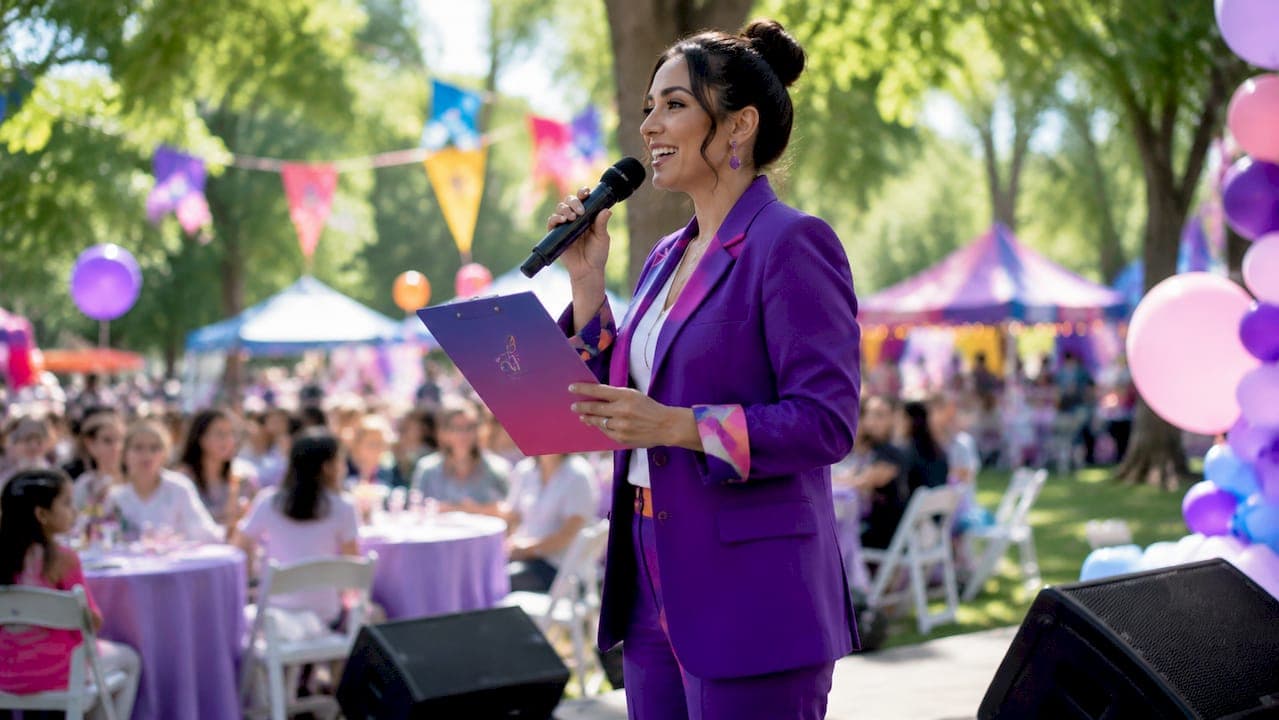
An emcee, formally known as a Master of Ceremonies (MC), is defined as the professional who guides an event's program from start to finish, managing flow, energy, and audience engagement in real time. The role of emcee at events goes far beyond holding a microphone. According to five core pillars: leading, listening, adapting, framing, and closing, a skilled MC acts as the event's strategic heartbeat, protecting both the audience experience and the organizer's brand reputation. For event planners and hosts in Northern Utah and beyond, understanding what an emcee actually does is the first step toward booking the right one.
What are the main duties of an emcee at events?
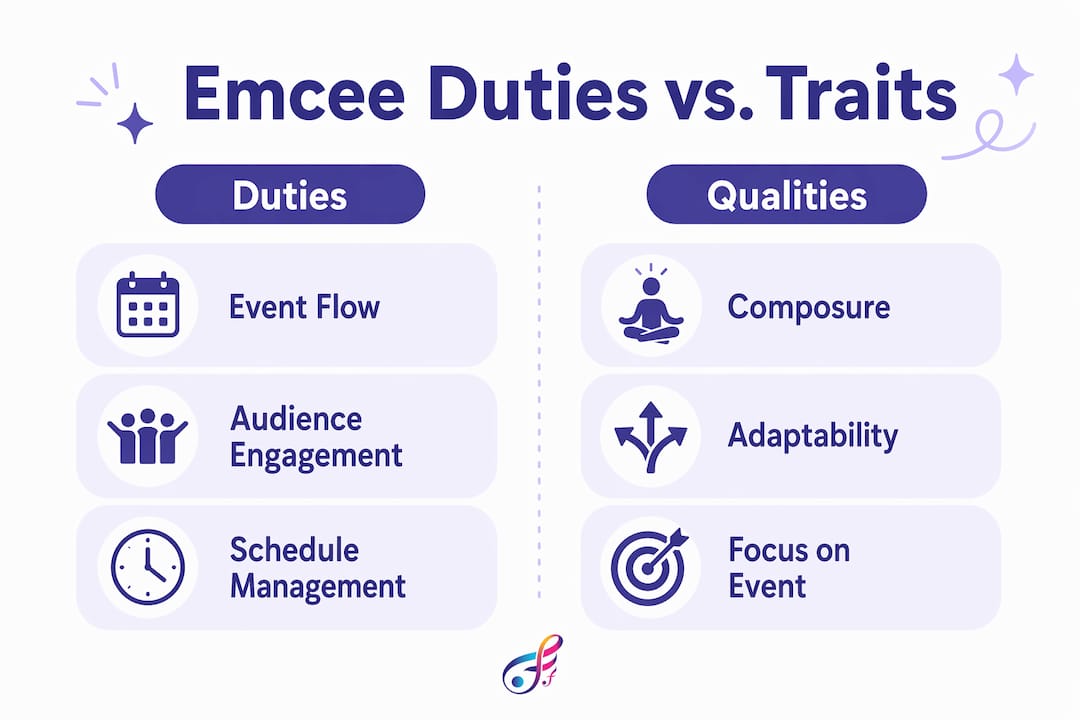
The emcee's core job is to keep the program moving without the audience ever feeling a gap. That sounds simple, but it requires preparation, timing, and real people skills. Emcee duties at events fall into several clear categories.
- Introducing speakers and segments: The MC frames each speaker or activity with context, building anticipation rather than just reading a name from a list.
- Managing transitions: Dead air between segments is where events lose momentum. The emcee fills those gaps with purpose, whether through a quick story, a poll, or a light interaction with the crowd.
- Audience engagement: From asking show-of-hands questions to calling out a table for a fun moment, the MC keeps guests present and attentive.
- Timekeeping: The emcee watches the clock so the organizer does not have to, nudging speakers who run long and compressing segments when the schedule slips.
- Handling surprises: A late speaker, a technical glitch, or a venue issue all land on the emcee's plate. Their job is to absorb the disruption before the audience notices.
Emcee responsibilities shift depending on the event type. At a corporate conference, the MC focuses on credibility, brand alignment, and speaker transitions. At a wedding reception, the role of emcee centers on warmth, storytelling, and guiding guests through toasts, dances, and dinner. At a school dance or quinceañera, energy and crowd interaction take priority.
Pro Tip: Share a detailed run sheet with your emcee at least one week before the event. Include speaker names, phonetic pronunciations, segment lengths, and any sensitive topics to avoid. The more context they have, the smoother the program runs.
How does a professional emcee improve event flow and guest engagement?
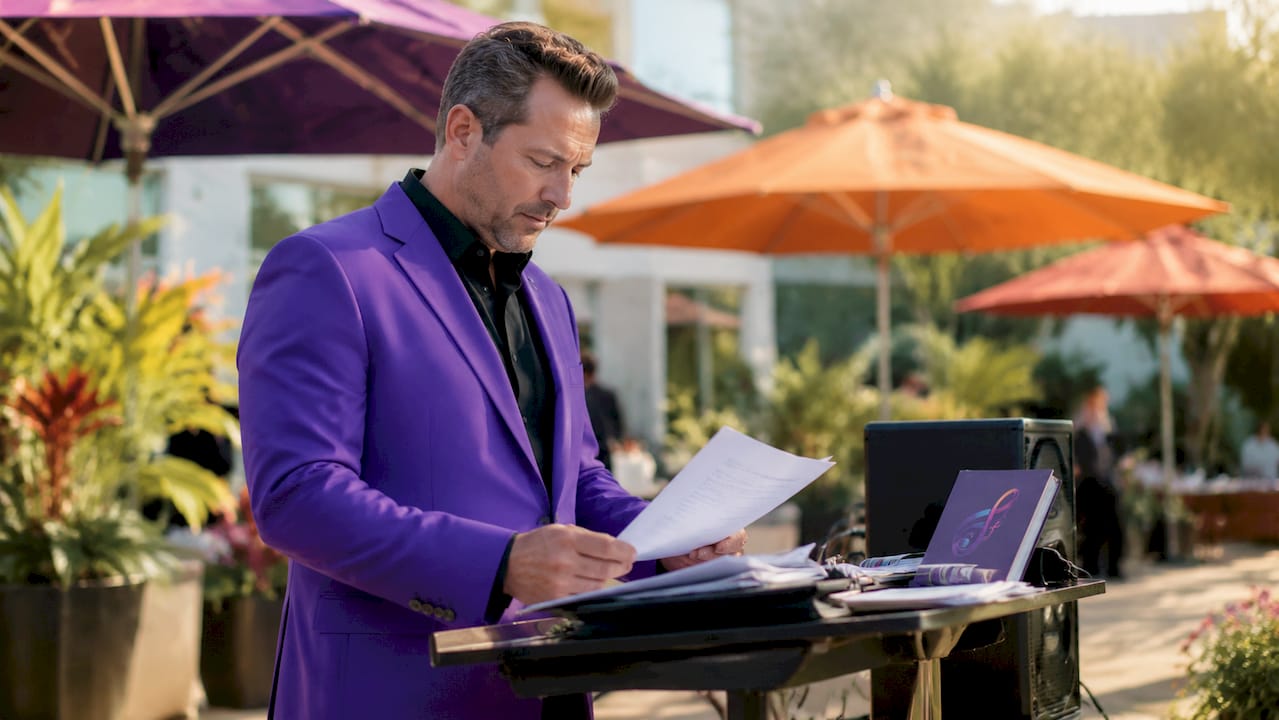
Events unravel through small moments: a clunky transition here, a two-minute silence there, a speaker who runs five minutes over. Each misstep is minor on its own, but they stack up fast. A professional MC manages people, program, and process simultaneously to prevent that drift.
The techniques a skilled emcee uses are more deliberate than they appear from the audience's perspective. Strong MCs read the room constantly, adjusting their energy level to match the crowd. If the audience is quiet after a heavy presentation, the emcee lightens the tone before the next segment. If energy is high, they channel it rather than cut it off.
Here are the core engagement strategies a professional emcee uses:
- Energy mirroring: Matching the crowd's current mood before gradually shifting it toward the desired tone.
- Micro-interactions: Brief, low-stakes audience moments like trivia questions or table challenges that keep guests mentally active.
- Connector framing: Introducing each segment by linking it to the event's overall theme or goal, so the program feels cohesive rather than random.
- Peer positioning: Speaking to the audience as a fellow participant, not a performer above them, which builds trust and reduces resistance to participation.
The emcee also safeguards the schedule by managing speaker overruns and stretching segments when needed. This protects the organizer from venue overtime fees and keeps guests from losing patience. Time management is the most operationally valuable service an emcee provides, even if guests never see it happening.
Pro Tip: Brief your emcee on the audience demographics before the event. Age range, professional background, and cultural context all shape which engagement techniques will land and which will fall flat.
What separates an effective emcee from a charismatic speaker?
The most common mistake event planners make is confusing a great speaker with a great emcee. They are different skills, and intentionality is the dividing line. A speaker is focused on delivering their own content. An emcee is focused on serving everyone else's content and the event's overall goals.
A professional emcee never tries to be the star of the show. Self-focused MCs who spend too much time on personal stories or jokes are a recognized red flag for poor event outcomes. The emcee's job is to make every speaker look good, every segment feel intentional, and every guest feel included.
| Trait | Professional emcee | General speaker |
|---|---|---|
| Primary focus | Event goals and audience experience | Delivering personal content |
| Preparation style | Run sheet review, audience research, speaker briefings | Content rehearsal |
| On-stage behavior | Facilitates others, steps back when needed | Holds the spotlight |
| Time management | Actively guards the schedule | Manages own segment only |
| Adaptability | Adjusts in real time to crowd and logistics | Follows prepared material |
Authority for an emcee is built during silent moments, not just onstage time. How the MC interacts with guests in the hallway before the program, how they coordinate backstage with the production team, and how they handle a speaker's last-minute change all shape how the audience perceives them. Guests sense whether the person at the mic is in control, even without knowing the details.
Pro Tip: When evaluating an emcee candidate, ask them how they handled a specific live event problem. Their answer reveals far more about their skill than a highlight reel does.
How do emcees handle unexpected situations during live events?
Live events are unpredictable by nature. A speaker cancels an hour before showtime. The AV system drops audio mid-presentation. A dinner service runs 15 minutes behind. The emcee's job is to absorb every one of these problems without letting the audience feel the impact.
Maintaining composure during technical or scheduling challenges is the most important trait a professional MC brings to a live event. They act as the captain navigating rough water so the organizer can focus on hosting rather than firefighting. The audience never needs to know a problem occurred.
The primary tool for handling surprises is improvisation. A skilled emcee can turn a two-minute transition into a ten-minute interactive segment without the audience realizing the schedule shifted. This requires genuine improv skill, not just confidence. The best MCs practice this the way athletes practice drills: deliberately and repeatedly.
Best practices for managing live event unpredictability:
- Establish a production contact: The emcee should have a direct line to the AV team and event coordinator throughout the event, not just during setup.
- Prepare filler content in advance: Stories, trivia, or audience games that can be deployed at any moment without preparation time.
- Know the hard stops: Venue curfews and catering windows are non-negotiable. The emcee needs these times memorized.
- Use humor carefully: Light humor can defuse a tense moment, but the emcee must read the room before deploying it during a serious glitch.
- Communicate changes quietly: When a segment shifts, the emcee signals the production team through a pre-agreed system rather than announcing the change to the crowd.
How can event planners get the most value from their emcee?
Hiring an emcee is not a last-minute task. The planners who get the best results involve their MC early in the planning process, treating them as a member of the event team rather than a day-of hire. Top emcees review event objectives, speaker lineups, and audience demographics in advance, then build customized content around that information.
The briefing process is where most of the value gets created or lost. A thorough briefing covers the event's purpose, the audience's expectations, the tone the organizer wants to set, and any topics that are off-limits. This is also the moment to align on event coordination details like load-in times, sound check schedules, and who the emcee reports to on the day.
- Involve the emcee in planning meetings: Even one call with the key stakeholders gives the MC context that no run sheet can fully capture.
- Provide an attendee persona brief: Who is in the room? What do they care about? What level of formality do they expect?
- Clarify the event's emotional arc: What should guests feel at the beginning, middle, and end? The emcee shapes that arc.
- Set clear communication channels: Who does the emcee contact if a speaker cancels or a segment needs to be cut?
- Evaluate experience, not just charisma: Ask for references from similar event types, and ask specifically about how they handled a difficult moment.
For corporate event planning, the emcee's alignment with brand voice is especially critical. A mismatch in tone between the MC and the company's culture can undermine an otherwise well-planned event.
Pro Tip: Schedule a 30-minute call between your emcee and your lead speaker at least three days before the event. That conversation alone can prevent the most common onstage awkwardness.
Key Takeaways
A professional emcee is the single most important factor in whether an event feels cohesive, energized, and worth attending from start to finish.
| Point | Details |
|---|---|
| Emcee vs. speaker | An emcee serves the event's goals; a speaker serves their own content. |
| Early involvement matters | Hire and brief your emcee weeks in advance, not days before the event. |
| Time management is core | Emcees protect schedules and prevent costly venue overtime by managing every segment. |
| Preparation builds authority | Run sheet reviews and audience research give the emcee credibility before they say a word. |
| Improvisation is a skill | The best MCs fill unexpected gaps with prepared filler content, not panic. |
What I've learned from watching emcees make or break events
The biggest mistake I see event planners make is treating the emcee as a nice-to-have rather than a structural element of the event. They spend months on the venue, the catering, and the decor, then book an MC two weeks out and hand them a run sheet the morning of. That sequence almost always shows up in the final product.
The emcees who genuinely transform an event are the ones who ask uncomfortable questions during the briefing. They want to know what went wrong at last year's event. They want to know which speaker tends to run long. They want to know if there is tension between any stakeholders in the room. That level of preparation looks like over-involvement until you see the result onstage.
The other thing I have noticed is that the best MCs make the organizer feel calm. That is not a soft benefit. When the planner is not anxious about the program, they are present with their guests. That presence changes the entire atmosphere of the event. A great emcee is, in a real sense, giving the organizer their event back.
— Drew Deenie
How Fiesta Fusion enhances your event beyond the mic
Planning a memorable event in Northern Utah takes more than a great emcee. The entertainment environment around your MC matters just as much as the person holding the mic.
Fiesta Fusion is a veteran-owned event entertainment company serving Ogden, Weber County, Davis County, and Salt Lake City. From 360 video booth experiences that give guests an unforgettable interactive moment to custom monogram lighting that sets the visual tone for your entire venue, Fiesta Fusion builds the entertainment layer that makes your event feel complete. Whether you are planning a wedding reception, a corporate gathering, or a quinceañera, the right combination of entertainment elements turns a good event into one guests talk about for years. Reach out to Fiesta Fusion to start building your event's full experience.
FAQ
What is the role of an emcee at a wedding reception?
The role of emcee at a wedding reception is to guide guests through the program, including introductions, toasts, first dances, and dinner, while keeping the energy warm and the timeline on track. A wedding emcee acts as the couple's advocate, making sure every moment lands the way they planned it.
How is an emcee different from a host or presenter?
An emcee manages the entire event program and adapts in real time, while a host or presenter typically delivers a fixed segment. The MC's job is to serve the event's goals, not their own content.
When should an event planner hire an emcee?
Hire your emcee as early as possible, ideally at the same time you book your venue and key vendors. Early involvement gives the MC time to review objectives, research the audience, and build customized content that fits the event's tone.
What makes a professional emcee worth the investment?
A professional emcee protects your schedule, prevents audience disengagement, and handles live problems before guests notice them. That combination directly protects your event's reputation and the experience you deliver to every attendee.
Do emcees work differently at corporate events versus social events?
At corporate events, emcees prioritize brand alignment, speaker credibility, and professional tone. At social events like weddings or quinceañeras, they shift toward warmth, energy, and crowd interaction. The core skills are the same; the application changes based on the audience and purpose.