TL;DR:
- Background music shapes mood and smooths transitions without demanding attention at events. A live operator adjusts music in real time, ensuring a seamless experience across all phases. Planning and briefing in advance help match music choices to each event segment for a cohesive ambiance.
Background music at events is unobtrusive music chosen and managed to shape mood, ease transitions, and fill silence rather than serve as the main performance. Merriam-Webster defines it as music that provides atmosphere without demanding attention. For planners booking weddings, quinceañeras, school dances, or corporate events in Northern Utah, that distinction matters: background music is a tool for pacing and feeling, not a concert.
Its three core jobs are setting the emotional tone, signaling transitions between event phases, and keeping silence from making guests uncomfortable.
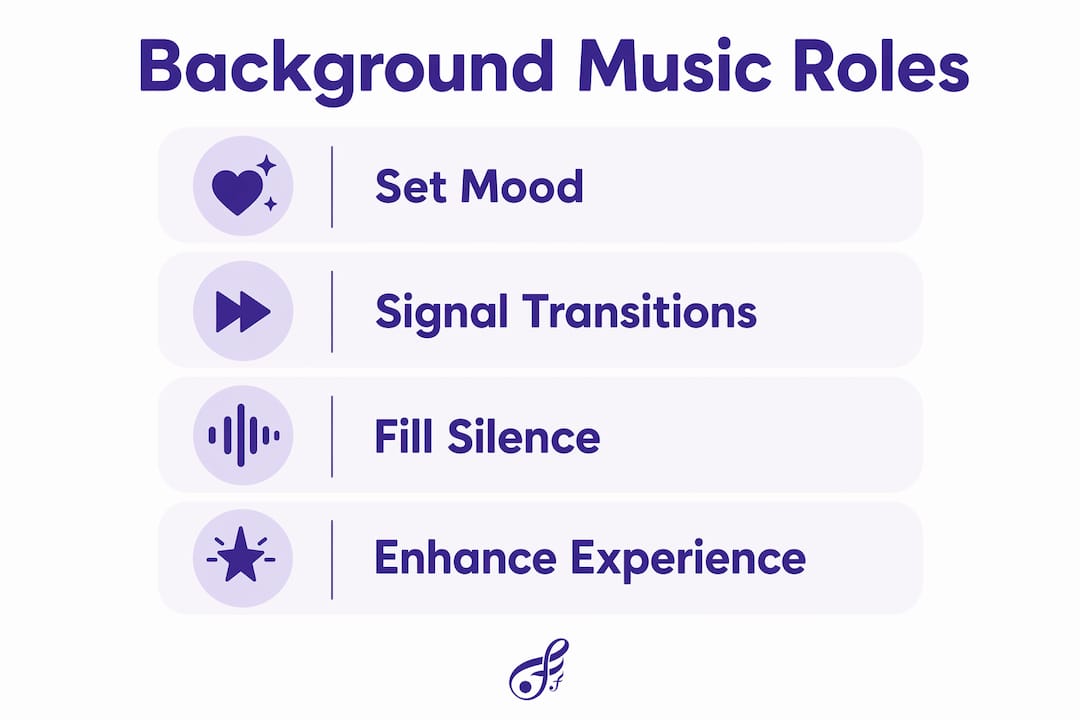
Table of Contents
- Why background music matters at your event
- How professionals program background music across an event
- Live DJ or static playlist: which one fits your event?
- Song selection guidance and examples by event type
- Technical considerations, timeline, and cost factors
- How to brief your DJ or vendor
- Key Takeaways
- A local planner's perspective on background music in Northern Utah
- Fiesta Fusion brings your event's music to life
- Useful sources
- FAQ
Why background music matters at your event
Intentional background music does more than fill dead air. Music influences mood, timing, and social interaction in measurable ways: tempo affects how long guests linger, volume affects how freely they talk, and lyrical content can either support or compete with conversation.
Here is what that looks like across the events Fiesta Fusion serves:
- Weddings: Soft instrumental strings during cocktail hour signal elegance and calm nerves after the ceremony.
- Quinceañeras: A mix of Latin pop and familiar English-language hits keeps multi-generational guests comfortable and engaged during dinner.
- School dances: Age-appropriate pop keeps energy high during mingling and signals the crowd when the DJ is about to open the floor.
- Corporate receptions: Subtle jazz or acoustic covers during networking helps shape first impressions and reduces the awkwardness of a quiet room.
Music also acts as an emotional bookmark. Songs tied to key moments like a processional, a first dance, or an award walk-on shape what guests remember long after the event ends. That is the difference between music as filler and music as part of the experience itself.
How professionals program background music across an event
Professional music programming builds an intentional arc: warm and conversational on arrival, unobtrusive during meals, then building toward the event's energy peak. Here is the standard phase framework:
- Arrivals and check-in — Warm, mid-tempo instrumental or acoustic. Volume low enough for easy conversation. Goal: welcoming, not distracting.
- Mingling and cocktail hour — Slightly more textured: light vocal tracks or familiar covers. Tempo stays moderate.
- Dinner or seated program — Pull back to lyric-light or fully instrumental. Guests need to hear each other across the table.
- Formalities and speeches — Music fades or cuts entirely. A trained operator handles mic ducking and smooth fade-outs so announcements land cleanly.
- Transitions — Short cue songs with clear intros work well here. They signal a shift without jarring the room.
- Post-meal flow and cool-down — Slower, familiar songs ease guests toward the exit or into a more relaxed social mode.
Mapping each segment to a target energy level reduces awkward silences and keeps the event feeling intentional from start to finish.
Pro Tip: Build 10–15 minutes of buffer music into each phase. Events run late, speeches run long, and a live operator can loop or extend a phase playlist without the room noticing. A static playlist cannot.
Live DJ or static playlist: which one fits your event?
A pre-loaded playlist is cheaper and predictable. A live DJ or trained sound operator is flexible and responsive. The right choice depends on your event's complexity.
| Factor | Live DJ / Sound Operator | Static Playlist |
|---|---|---|
| Real-time adjustments | Yes — reads the room, adjusts tempo and volume | No |
| Mic and announcement handling | Yes — ducking, fade-outs, live cues | No |
| Schedule flexibility | High — adapts to delays or changes | Low |
| Cost | Higher | Lower |
| Best for | Weddings, quinceañeras, school dances, multi-phase events | Simple receptions, low-key background only |
A static playlist cannot handle unplanned announcements or abrupt schedule changes. A live operator can fade music mid-phrase, hand a mic to a speaker, and resume without a beat out of place.
Hire a live operator when:
- Your event has multiple phases with different energy targets
- Speeches, toasts, or award presentations are on the schedule
- Timing is likely to shift (it almost always does)
- You need someone to read the room and respond to crowd energy
A playlist works fine for a low-key corporate lunch or a simple cocktail reception where the program is fixed and no one needs a mic.
Song selection guidance and examples by event type
Genre and vocal balance should match the phase, not just the event type. Classical or chamber music suits elegant dinners; on-trend wide-appeal pop fits celebratory receptions; family events benefit from playful pop and multilingual mixes.
By phase:
- Arrival: Warm instrumental (acoustic guitar, light piano, bossa nova). No heavy lyrics competing with greetings.
- Dinner: Lyric-light jazz, soft R&B instrumentals, or acoustic covers of familiar songs.
- Transitions: Songs with a clear, recognizable intro — guests register the shift without being told.
- Cool-down / send-off: Slower, familiar tracks. Think classic Motown or soft pop that most ages recognize.
By event type:
- Weddings: Ed Sheeran acoustic covers, Frank Sinatra standards, or light classical during dinner; first dance and parent dances as emotional bookmarks.
- Quinceañeras: Marc Anthony or Selena during dinner; a mix of reggaeton and current pop for the reception floor; traditional waltz for the vals.
- School dances: Current Top 40 and clean hip-hop during mingling; the DJ opens the floor with a high-energy crowd-starter.
- Corporate receptions: Pharrell Williams' "Happy" for opening energy, Frank Sinatra's "Come Fly with Me" during dinner service, upbeat funk for post-program mingling.
Pro Tip: For quinceañeras and multi-generational family events, give your DJ a short "must-play" and "do not play" list in Spanish and English. Cultural no-plays are just as important as must-plays, and a good operator will ask for both.
For more on how music shapes birthday and family celebrations, the role of music at birthday parties guide covers the same principles in a family-event context.
Technical considerations, timeline, and cost factors
Audio checklist
- Speaker placement: position speakers to cover the room evenly, avoiding echo off hard walls (common in Northern Utah banquet halls and barn venues)
- Zone volumes: dining areas run quieter than entry or dance zones
- Mic feeds: all live mics need a dedicated channel with ducking set up before guests arrive
- Power and backups: confirm outlet locations and bring a backup power strip or UPS for critical gear
Event audio timeline
| Time Before Event Start | Task |
|---|---|
| 2–3 hours | Equipment load-in and speaker placement |
| — | Sound check, mic levels, playlist cue review |
| — | Final walk-through with venue coordinator |
| Event start | Operator present and monitoring throughout |
| Post-event | Strike and load-out per venue rules |
Cost factors and contract items
Cost varies by operator experience, equipment, and event length. Key line items to clarify in any contract:
- Operator or DJ rate (hourly or flat per event)
- Equipment rental if not included
- Travel fees for venues outside the operator's base area
- Overtime rate if the event runs long
- Who provides the playlist and when it is due
- Music licensing: most venues hold a blanket license (ASCAP, BMI, SESAC), but confirm in writing who is responsible
- Liability and insurance documentation
For a full look at what wedding entertainment packages typically include, the wedding entertainment package guide breaks down common structures and add-ons.
How to brief your DJ or vendor
Briefing checklist
- Share a written event timeline with phase start times and expected durations.
- List desired moods per phase (e.g., "dinner: calm and conversational; post-dinner: upbeat").
- Provide must-play and do-not-play lists, including cultural or family-specific requests.
- Identify key cue points: processional start, first dance, cake cutting, send-off.
- Confirm mic plan: who speaks, when, and how many mics are needed.
- Agree on a point of contact at the venue for day-of coordination.
Red flags to watch
- Operators who refuse to take a phased brief and insist on full creative control
- No backup equipment on the gear list
- Vague answers about mic handling or announcement cues
- Unwillingness to provide a written phased mini-playlist before the event
Request in writing: a phased mini-playlist, mic plan, arrival and setup window, and a named day-of contact. If a vendor cannot produce these, keep looking.
Key Takeaways
Background music at events works best when it is programmed intentionally across phases, managed by a live operator who can read the room, and briefed in writing before the event day.
| Point | Details |
|---|---|
| Define the role first | Background music shapes mood and transitions; it is not the main performance. |
| Program the arc | Map each phase (arrivals, dinner, speeches, post-meal) to a target energy level and mini-playlist. |
| Prefer a live operator | When timing is fluid or mics are involved, a live DJ or sound operator outperforms any static playlist. |
| Brief your vendor in writing | Provide a phased timeline, must-play/do-not-play lists, and a mic plan before the event. |
| Fiesta Fusion for Northern Utah | Fiesta Fusion handles full music programming, mic management, and event enhancements for weddings, quinceañeras, school dances, and corporate events across Weber, Davis, and Salt Lake counties. |
A local planner's perspective on background music in Northern Utah
Northern Utah venues present a specific acoustic challenge most generic guides skip entirely. Barn venues in Weber County, like those near Cherrywood Ranch, have high ceilings and hard wood surfaces that amplify echo. A static playlist at the wrong volume turns dinner conversation into a shouting match. The fix is not just lower volume; it is speaker placement and a live operator who can adjust zone levels as the room fills.
Evening events in this region also tend to run on tighter schedules than planners expect. Sunset timing in summer pushes outdoor ceremonies later, which compresses the dinner-to-dancing window. A live operator who knows the local rhythm can compress or extend phases without the crowd feeling rushed.
Fiesta Fusion is a veteran-owned DJ and entertainment company based in Ogden, and the team brings that local context to every booking. The DJ role at corporate parties guide on the Fiesta Fusion blog reflects the same phased-programming approach described here, applied to Northern Utah corporate events specifically.
Fiesta Fusion brings your event's music to life
Planning background music for a Northern Utah wedding, quinceañera, school dance, or corporate event means more than picking a playlist. It means having a trained operator in the room who can read the crowd, handle the mic, and keep every phase moving on time.
Fiesta Fusion covers the full picture: professional DJ services with phased music programming, uplighting, 360 video booths, cold spark fountains, and custom event enhancements across Weber County, Davis County, and Salt Lake City. Every booking includes a pre-event planning session where the team builds your phased mini-playlist, confirms your mic plan, and maps cue points for every key moment. Veteran-owned and locally rooted, Fiesta Fusion has the regional experience to handle the acoustics, timing, and cultural details that matter for events in this area. Check availability and book your date to get started.
Useful sources
- Merriam-Webster: Background Music — The authoritative dictionary definition used to anchor the BLUF; useful for planners who need a citable definition.
- Social Tables: Event Background Music — Practical overview of how music affects mood, timing, and guest behavior at events; covers genre selection by setting.
- Book Music Bureau: Music Programming — Detailed guidance on building a phased event playlist arc from arrival through send-off.
- LiveBroadcastNews: How Music Sets the Tone — Covers the emotional bookmark concept and segment-to-energy-level mapping framework.
- AVStage: Background Music vs. DJ — Explains the operational differences between a static playlist and a live sound operator, including mic ducking and active management.
- All Around Sound: Music in Corporate Events — Strong case for treating music as part of the event experience, not background filler; useful for corporate planners.
- Fiesta Fusion: DJ at Corporate Parties Guide — Local resource covering professional DJ responsibilities and music programming for Northern Utah corporate events.
FAQ
What is background music at events?
Background music at events is unobtrusive music chosen to shape mood, ease transitions, and fill silence rather than to serve as the main performance. It runs throughout phases like arrivals, dinner, and transitions without demanding guest attention.
How loud should background music be at an event?
Volume should allow easy conversation without guests needing to raise their voices. During dinner and networking, a good rule is that two people seated across a table can talk at a normal level without straining.
Do I need a DJ for background music, or will a playlist work?
A playlist works for simple, low-key receptions with a fixed program and no live mics. For events with multiple phases, speeches, or timing that may shift, a live DJ or sound operator is the better choice because they can adjust in real time.
What are good background music examples for a wedding dinner?
Lyric-light jazz, acoustic covers of familiar pop songs, and soft classical or bossa nova all work well for wedding dinners. The goal is music guests recognize and enjoy without lyrics that compete with table conversation.
Does Fiesta Fusion handle background music programming for Northern Utah events?
Yes. Fiesta Fusion provides phased music programming, mic management, and full sound operation for weddings, quinceañeras, school dances, and corporate events across Weber County, Davis County, and Salt Lake City.